
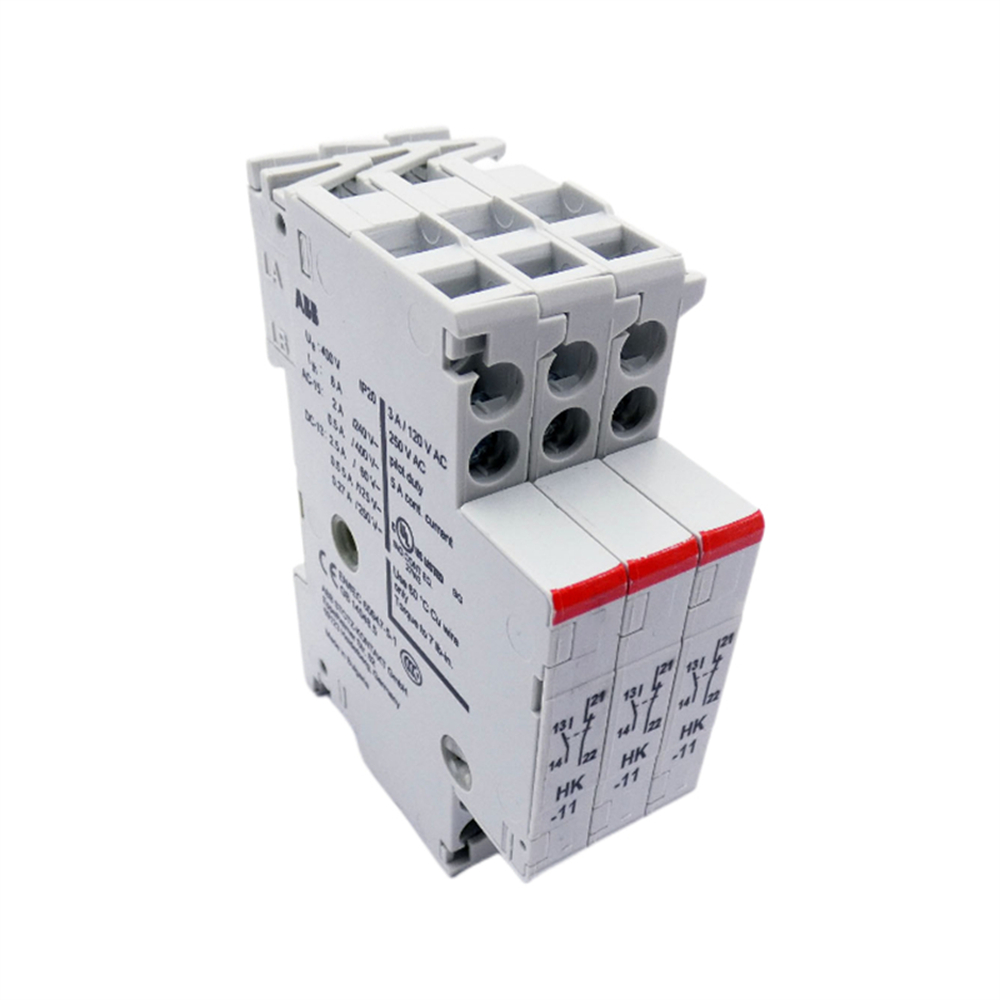
ABB HK-11 auxiliary contact
ABB HK-11 auxiliary contact
ABB brand historical background association
ABB's profound accumulation in the field of industrial electrical can be traced back to the merger of ASEA and BBC in 1988. Since then, with its persistent pursuit of innovation and global resource integration capabilities, it has continuously broken through in the research and manufacturing of various electrical equipment. As an indispensable key component in electrical control systems, auxiliary contacts have also been extensively researched and optimized by ABB. The HK-11 auxiliary contact is the crystallization of its technical strength and manufacturing process in this field. Relying on ABB's globally unified high standard research and development system and strict quality control, it is committed to providing reliable signal feedback and control expansion solutions for various electrical control systems.
Product Overview
ABB HK-11 auxiliary contacts are auxiliary control components suitable for specific electrical equipment (such as some ABB motor circuit breakers, etc.), mainly used in industrial electrical control systems to achieve signal feedback of the main circuit status and expand control functions. It can work in conjunction with equipment such as contactors and circuit breakers in the main circuit, transmitting the on/off information of the main circuit to the control circuit through the opening and closing status of its own contacts, providing accurate equipment operation status signals for the control system. At the same time, it can be used to implement complex electrical control logic, such as interlocking control, sequential control, etc., enhancing the automation control capability of industrial electrical systems.
Specification parameters
Contact form: Usually a combination of 1 normally open (NO) and 1 normally closed (NC) contact, this configuration can meet various control logic requirements. The normally open contact closes when the device is powered on, while the normally closed contact opens when the device is powered on, making it convenient for engineers to flexibly design circuits according to actual control requirements.
Rated working voltage: It can adapt to a wide range of voltage levels, such as 690V AC at AC 50Hz or 60Hz; The rated working voltage of DC is generally 250V DC. This enables the HK-11 auxiliary contacts to be widely applied in industrial electrical systems of different power supply types and voltage specifications.
Rated working current: Its rated heating current has clear numerical specifications, such as up to 10A. This parameter determines the current that the auxiliary contacts can stably carry, ensuring that under normal working conditions, the contacts will not be damaged due to overheating and ensuring the reliability of electrical connections.
Electrical lifespan: With high electrical lifespan indicators, it can achieve up to 1 million electrical operation cycles under rated load conditions. This means that during long-term frequent use, the HK-11 auxiliary contacts can maintain stable performance, reduce the probability of failures caused by contact wear and aging, and lower equipment maintenance costs.
Mechanical lifespan: The mechanical lifespan is equally outstanding, reaching millions of operating cycles. This is due to the use of high-quality materials and precision manufacturing processes, ensuring that the contacts can maintain good mechanical performance during long-term and frequent mechanical actions, such as accurate closure and disconnection of contacts, flexibility of actions, etc.
Performance advantages
Reliable signal feedback: High quality contact materials such as silver alloy are used, which have good conductivity and resistance to arc erosion. When the main circuit equipment operates, it can quickly and accurately switch the contact state, stably transmit the on/off information of the main circuit to the control circuit, provide reliable feedback on the equipment operation status for the control system, and avoid control errors caused by inaccurate signal transmission.
Flexible control extension: The contact configuration of 1 normally open and 1 normally closed provides great flexibility for the design of electrical control systems. Engineers can easily construct various complex control logics using these contacts according to actual control requirements. For example, in the motor forward and reverse control circuit, interlocking control between the motor forward and reverse contactors can be achieved through HK-11 auxiliary contacts to prevent short circuit faults caused by the simultaneous closing of two contactors.
High compatibility and adaptability: It can adapt well to various electrical equipment from ABB and other brands. Whether it is ABB's own motor circuit breakers, contactors, or other equipment that meets corresponding electrical standards, the HK-11 auxiliary contacts can achieve seamless connection and collaborative work, improving the convenience and compatibility of electrical system integration.
Durable and sturdy structural design: The structural design fully considers the complexity and strictness of industrial application environments, using high-strength insulation shell materials with good mechanical protection performance, which can effectively resist external mechanical impact, vibration, dust, moisture and other environmental factors, ensuring stable operation in harsh industrial environments.
precautions
Correct selection and installation: When selecting, it is necessary to choose the appropriate HK-11 auxiliary contact model based on factors such as the actual type of main circuit equipment used, voltage level, current size, and control logic requirements. During the installation process, strictly follow the product installation manual to ensure that the contacts are firmly installed, the wiring is correct and error free, and to avoid problems such as poor contact and short circuits caused by improper installation.
Suitable working environment: It should be installed in a dry, well ventilated, and suitable temperature environment. The working temperature range is generally -5 ℃ to+40 ℃, and the relative humidity should not exceed 85% (without condensation). Avoid placing it in places with high temperature, humidity, strong electromagnetic interference, or corrosive gases to prevent affecting the electrical performance and service life of the contacts.
Regular maintenance and inspection: Regularly inspect the HK-11 auxiliary contacts to see if there are any signs of wear, erosion, dust accumulation, etc. on the surface of the contacts. If severe contact wear or obvious arc marks are found on the surface, they should be cleaned or replaced in a timely manner. At the same time, check if the connecting cables are loose to ensure the reliability of the electrical connection. In addition, regular functional testing should be conducted on the electrical system where the auxiliary contacts are located to ensure that they can function properly during actual operation.
Similar model supplement
In ABB's auxiliary contact product line, models similar to HK-11 include HK-10. HK-10 auxiliary contacts have certain similarities with HK-11 in basic functions and application scenarios, but there may be differences in specific contact forms, rated parameters, and other aspects. For example, HK-10 may only have a single configuration of normally open or normally closed contacts, which is suitable for some electrical systems with relatively simple control logic requirements; The combination of 1 normally open and 1 normally closed contact of HK-11 is more suitable for constructing complex control logic. When selecting, users need to comprehensively compare the characteristics and advantages of different models based on specific industrial application scenarios, control requirements, and budget factors, and choose the most suitable auxiliary contact products.
Application scenarios
Industrial motor control system: In the control circuits of various industrial motors, HK-11 auxiliary contacts are used to provide feedback on the motor's operating status, such as the motor's start, stop, overload protection actions, and other information. At the same time, it can be used to achieve forward and reverse interlocking control of motors, sequential start and stop control of multiple motors, etc., to ensure the safe and stable operation of industrial motor systems.
Power distribution system: In distribution equipment such as power substations and distribution rooms, auxiliary contacts can be used to indicate the opening and closing status of circuit breakers, isolating switches, and other equipment, providing intuitive equipment operation status information for power operation and maintenance personnel, facilitating timely understanding of the operation status of the power system, troubleshooting, and equipment maintenance.
Automated production line control system: On the automated production line, HK-11 auxiliary contacts work together with various automation equipment such as PLC, sensors, actuators, etc. By changing the contact state, the operating status signal of the equipment is transmitted to control units such as PLC to achieve automated monitoring and control of the production process. For example, on the production line, auxiliary contacts are used to control the start and stop of related equipment based on the conveying status of the product, ensuring the smooth progress of the production process.
- OMRON
- ABB
- General Electric
- EMERSON
- Honeywell
- HIMA
- ALSTOM
- Rolls-Royce
- MOTOROLA
- Rockwell
- Siemens
- Woodward
- YOKOGAWA
- FOXBORO
- KOLLMORGEN
- MOOG
- KB
- YAMAHA
- BENDER
- TEKTRONIX
- Westinghouse
- AMAT
- AB
- XYCOM
- Yaskawa
- B&R
- Schneider
- KONGSBERG
- NI
- WATLOW
- ProSoft
- SEW
- ADVANCED
- Reliance
- TRICONEX
- METSO
- MAN
- Advantest
- STUDER
- DANAHER MOTION
- Bently
- Galil
- EATON
- MOLEX
- DEIF
- B&W
- ZYGO
- Aerotech
- DANFOSS
- Beijer
- Moxa
- Rexroth
- Johnson
- WAGO
- TOSHIBA
- BMCM
- SMC
- HITACHI
- HIRSCHMANN
- Application field
- XP POWER
- CTI
- TRICON
- STOBER
- Thinklogical
- Horner Automation
- Meggitt
- Fanuc
- Baldor
- SHINKAWA
- Other Brands
- UniOP
- KUKA
- Iba
- Beckhoff
- ADLINK
-
 LTi DRiVES LR32.8 Line Reactor
 -
 Lust LTI Drives CDS44.032 Inverter
 -
 LUST LTI DRIVES CDB34.008 W2.4 Frequency Converter
 -
 LTI DRIVES SO84.012.1030.0000.2 Servo Drive
 -
 LTI SO84.024.1030.0011.2 Servo Drive Controller
 -
 LTi Drives SO84.076.S030.0001.2-W 52.5 kW Controller
 -
LTi LUST SO84.012.1030.0000.2 Servo Drive Controller
-
LTI Drives SO84.008.0020.1070.1 Servo Controller
-
 LTI Motion CDE32.004.C3.0 Positioning Controller 1.6 kVA
 -
 LUST LTi Drives CDB34.010C2.4 Servo Drive Controller
 -
Lust LTi Drives CDD32.003.C2.0 Servo Controller
-
 Lust LTi Drives CDB32.003C2.3 Servo Controller UM-8I40
 -
 LTi Drives SO CM-1.0003.110C.0 Control Module
 -
 LTI Drives GmbH LR34.44-UR Servo Drive Unit
 -
 LTI DRIVES VF1202S Frequency Inverter
 -
 LTi ServoOne Junior SO24.004 Servo Drive
 -
Lust CDA34.003 C1.4 LTI Servo Drive
-
 LUST LTi Drives CM-CAN1 Communication Module
 -
 LUST LTi Motion CDB22.004 CDB2000 Drive
 -
LUST Lti Drives CDE32.003 Frequency Drive
-
 LTI VF1406M.C9.PT1.BR1 Frequency Drive
 -
 LUST LTI Drives CDA34.006 W3.0 Servo Drive
 -
 Lust LTI Drives CDA34.017.C2.CP Servo Controller
 -
 LTi DRiVES LST-097-5-30-560/T1 Servo Motor
 -
LTi Drives LSH-050-2-45-320/T1 Servo Motor 4500rpm
-
 LUST LTI Drives VF1204S G10 FA VFD 0.75 kW 230VAC
 -
 LTi Drives LST-097-3-30-560/T1 1R Servo Motor
 -
 LTI Servo One Junior SO22.003.0082.0000.0 Controller
 -
 LTI Drives GmbH SO22.003.0042.0000.0 Servo Controller
 -
 LUST LTi CDB32.004.C2.4.SH Servo Drive 24-48V
 -
 LTi Drives LST-097-5-30-560/T1 1R Servo Motor
 -
 LUST LTI Drives CM-CAN1 3084464 Communication Module
 -
LUST LTi Drives CDE32.003.C2.3 Positioning Controller 230V
-
 LUST LTi Drives SO84.020.0020.0000.2 Servo One 20A
 -
LTI DRiVES CDB34.003 Servo Drive
-
 LTI DRiVES CDE34.010 D2.4 Frequency Inverter
 -
 LTi DRiVES BR-090.03.540-UR Braking Resistor
 -
 LTI SO84.012 Servo Drive
 -
 LTi Drives LSH-050 Servo Motor
 -
LTi Drives SO84.004 Servo Controller
-
LTI DRiVES LSN-127 Servo Motor
-
LUST CDA34.006 W3.0 Servo Controller
-
 LTi DRiVES SO84.004 Servo Drive
 -
LUST LTi DRiVES LST-097-3-30-560/T1.1R Servo Motor
-
LTi Drives CDE32.003.C2.4 Software LBXR41024B014
-
 LTI Motion Servo One SO84.006.0173.1100.1 Controller
 -
LTi Drives LSH-074-2-30-320/T1 G6.1M Servo Motor
-
 LUST CDB22.004.0111.00.0 LTi Drives Servo Controller
 -
 Lust So84.012.0030.1700.2 LTi Drives Servo Controller
 -
LTi Drives Lust VF1204S G10 FB I6 M3 Drive Module
-
LTI Drives GmbH SO84.008.0020.0000.2 Servo Controller
-
Lust CDA34.006.C2.0 LTI Drives Servo Controller 2.2 kW
-
 LTi Drives Lust CDA34.017.W3.0 Control Unit 7.5 kW
 -
LTi Drives CDE34.010 Positioning Controller 10A
-
Lust LTi Drives CDA34.010 W3.0 Frequency Inverter
-
 LTi SO22.003.0010.0000.0 ServoOne Junior Drive
 -
LUST LTi Drives CDA32.008 Servo Drive
-
LUST LTi DRIVES LSH-074 Servo Motor
-
Lti CDB32.004.C2.4.SH AC Servo Drive
-
Lust LTi Drives VF1202S Frequency Inverter
-
Lust LTI Drives CDB32.004.C3.0.SH Servo Controller
-
LUST SO84.012.0030.1700.2 Servo Drive
-
Lust LTi CDB32.004 Servo Drive
-
LUST LTI Drives CDA34.006 Servo Drive
-
LTi DRiVES BR-090.03.540-UR Braking Resistor
-
Lust LTI Drives CDA34.017 Servo Controller
-
Lust LTi Drives CDE34.010.D2.4 Positioning Controller 10A
-
LTi Drives LSH-050-3-30-48/T1 PM Servo Motor
-
 LTI CDD34.005.C2.1 Servo Drive Controller
 -
LUST LTI Drives CDB32.003.C2.4 Servo Drive
-
LTI D-35633 Drive Servo Drive Controller
-
 LTI Drives GmbH SO22.003.0042.0000.0 Servo Controller
 -
LTi Drives SO84.006.1030.0000.2 Servo Controller
-
LUST LTi Drives CDA32.008 C1.4 HF V180.15 1.5 kW
-
 LTI Drives Servo One SO84.045.0010.0001.2-W 22 kW
 -
Lust LTI CDE32.003.C2.4 Servo Drive Controller
-
LUST LTI Drives CDA34.003 Servo Controller
-
LUST LTI Drives CDA32.006 Servo Controller
-
Lust LTi Drives CDE32.004 Servo Drive
-
LUST LTi Drives SO84.012 Servo Controller
-
 LTI DRIVES LSH-060 Servo Motor
 -
LUST LTI Drives CDE32.004 with CM-DPV1
-
LTi DRiVES SO84.016 Servo Drive
-
LTI Drive CM-DPV1 Communication Module
-
LTi DRiVES DSM4-05.4-20R82-400 Servo Motor
-
LUST LTI Drives CDA34.003 Servo Controller
-
LTI Drives Servo One SO84.045.0010.0001.2-W 22 kW
-
LUST LTI Drives CDB32.008 W2.4 BR PC1 Servo Drive
-
LTi Drives SO84.006.1030.0000.2 Servo Controller
-
LTI DRIVES CDE34.010D2.4 Servo Drive Controller
-
 Hettich Rotanta 46 RSC Control Board VF1204S
 -
Lust LTI Drives CDA34.017.C2.CP Servo Controller 7.5 kW
-
LUST LTI Drives CDA34.003.C3.0 Servo Controller 0.75 kW
-
Lust LTI Drives CDA34.008.C1.3 Servo Controller 3 kW
-
Lust LTi Drives CDB22.004.0111.00.0 Servo Drive
-
LTi Drives SO84.032.0030.1000.2 Servo Controller
-
LUST LTi CDA32.004 C1.4 H08 B0 Servo Controller
-
LTI DRIVES CDB34.010 C2.4 Servo Drive
-
LUST LTi Drives CDA32.008 C1.4 Servo Controller
-
LTI Motion CDE32.003.C3.0 Servo Positioning Controller
-
LTI DRIVES CDE34.010 D2.4 Servo Drive Unit
-
 LUST LTi Drives CDD34.005.C2.1 Servo Drive
 -
LTi Drives SO84.012.0002.0100.2 Servo Controller
-
LUST LTi Drives CDE34.010.D2.4 Servo Drive
-
LUST LTI Drives CDF30.008 Servo Drive
-
LTi Drives SO CM-P.0010.11.00.0 Power Module
-
 LTi DRiVES SO84.008.0002.0100.2 Servo Controller
 -
LTI MOTION Servo Drive SO22.006.0040.1000.1
-
LTi DRiVES SO24.007.0030.1000.0 ServoOne Junior
-
LTi DRiVES LUST BC1300 Braking Module
-
LUST LTI DRIVES CDE34.010 Variable Frequency Drive
-
LUST LTI DRIVES CDA32.004 Servo Drive
-
LTi DRiVES LST-074-2-30-560/T1 Servo Motor
-
LUST LTI DRIVES CDB32.008 Servo Drive Module
-
 Lust Antriebstechnik LTI Drives VF1204S Inverter
 -
Lust LTI Drives CDE32.008 C3.0 Positioning Controller
-
LTI Drives LUST Servo One C-5633 D-35633
-
 Lust LTI Drives CDA34.008.C1.3 Servo Controller 3kW
 -
LTI CDF30.008 C2.6 Servo Drive 10962161
-
LUST LTi Drives CDB32.004 C2.3 SH Servo Drive
-
Lust LTi Drives CDE34.010 D2.0 Servo Drive
-
LTi Motion CDA32.006 Servo Drive with CM-CAN1
-
Lust LTI Drives CDB32.008 C2.3 Servo Controller
-
LTi CDE34.017.W3.0 Servo Drive
-
LUST LTI LST-074-2-30-320/T1 Servomotor
-
Lust LTi CDF30.002 C3.0 Positioning Controller
-
LTi DRIVES CDF30.008.C2.4 Drive
-
LUST LTI CDB32.008 W2.4 BR PC1 Drive


