
ABB TK516 Thermal Overload Relay and Circuit Board Circuit Breaker
ABB TK516 Thermal Overload Relay and Circuit Board Circuit Breaker
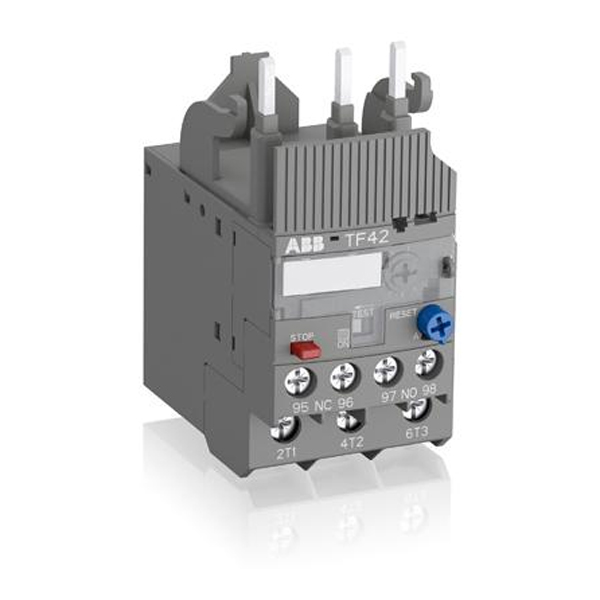
ABB TK516 thermal overload relay
Functions and Applications
ABB TK516 thermal overload relay plays a crucial role in industrial electrical systems, mainly used for overload protection of three-phase motors. In actual production, electric motors often experience overload due to various reasons, such as sudden increase in mechanical load, improper motor selection, etc. If the overload situation cannot be dealt with in a timely manner, it will cause the motor winding to overheat, accelerate insulation aging, and in severe cases, even burn out the motor. The TK516 thermal overload relay can monitor the motor current in real time. Once the current exceeds the set overload threshold, it will quickly act, cut off the control circuit, and protect the motor from being burned out, ensuring the stable operation of production equipment. For example, in the large-scale ventilation fan system of a factory, if the fan motor is overloaded due to air duct blockage or other reasons, the TK516 thermal overload relay can respond in a timely manner to prevent motor damage and ensure the continuous normal operation of the ventilation system.
Working principle
Its working principle is based on the current thermal effect. When the motor is running normally, the thermal element inside the thermal overload relay generates heat through the normal working current, causing the bimetallic strip to slowly bend, but the degree of bending at this time is not enough to trigger the action mechanism. However, once the motor is overloaded, the working current increases sharply, the thermal element heats up quickly, the temperature rises rapidly, and the bimetallic strip bends faster due to uneven heating. When the degree of bending reaches a certain level, push the action mechanism to open the normally closed contact and close the normally open contact. In the control circuit, normally closed contacts are usually connected in series in the coil circuit of the AC contactor. When the thermal overload relay is activated, the normally closed contacts open and the AC contactor coil loses power, thereby cutting off the main power supply line of the motor and achieving overload protection for the motor.
Key points for use
Current setting value setting: Accurate setting of current setting value is the key to realizing the protection function of TK516 thermal overload relay. In general, the setting value should be set between 0.95-1.15 times the rated current of the motor. If the setting value is set too high, when the motor is truly overloaded, the thermal overload relay may not be able to operate in a timely manner and fail to provide protection; If the setting value is set too small, the motor may frequently touch the thermal overload relay during normal operation, causing the motor to malfunction. For example, for a motor with a rated current of 10A, the setting value of the thermal overload relay can be set at around 9.5A during light load operation; If it is running under overload, it can be set to around 11A.
Maintenance of connection contacts: It is crucial to ensure that the contacts of the thermal overload relay are tightly connected to the circuit. If the contact is not in good contact, additional resistance will be generated during operation, resulting in heating, which may cause the thermal overload relay to malfunction. Therefore, in installation and daily maintenance, it is necessary to regularly check the contact connections to ensure their firmness and reliability.
Reset operation: After the thermal overload relay is activated, the reset method should be selected reasonably according to the actual application scenario. In the case of unmanned operation on site, the reset mode should be set to manual reset to prevent the motor from automatically resetting and starting when the fault is not resolved, which may cause secondary faults or safety accidents. In scenarios where someone is on duty and can handle faults in a timely manner, automatic reset or manual reset can be selected according to the needs.
Circuit board circuit breaker
Functions and Applications
Circuit board circuit breakers are mainly used for overload and short circuit protection of circuits on circuit boards. In modern industrial automation control systems, circuit boards undertake important functions such as signal processing and control instruction transmission. Once the circuit on the circuit board is overloaded or short circuited, it may damage the electronic components on the circuit board and cause the entire control system to malfunction. Circuit board circuit breakers can quickly cut off the circuit when there is an abnormal increase in current, protecting the safety of the circuit board and related electronic equipment. For example, in the PLC control cabinet of an industrial automation production line, circuit board circuit breakers can effectively protect PLC circuit boards, communication circuit boards, etc., ensuring stable operation of the production line's automation control.
Working principle
Circuit board circuit breakers typically use bimetallic or electromagnetic working principles. Bimetallic circuit board circuit breakers are similar to thermal overload relays, utilizing the thermal effect generated by current passing through the bimetallic strip. When the circuit is overloaded, the current increases, and the bimetallic strip heats up and bends. After reaching a certain degree, it pushes the release mechanism to operate and disconnect the circuit. Electromagnetic circuit board circuit breakers are based on the principle of electromagnetic induction. When a short circuit occurs in the circuit, the short-circuit current instantly increases, generating a strong electromagnetic force that causes the trip mechanism to quickly operate and cut off the circuit.
Key points for use
Selection and adaptation: When selecting a circuit breaker for a circuit board, it is necessary to ensure that its rated current, rated voltage, and other parameters match the actual working requirements of the circuit board. If the rated current is selected too low, the circuit breaker may trip frequently during normal operation of the circuit; If the rated current is selected too high, the circuit breaker may not be able to operate in a timely manner when the circuit experiences overload or short circuit. For example, for a circuit board with a working voltage of 24V and a normal working current of 2A, a circuit board circuit breaker with a rated voltage of not less than 24V and a rated current of around 2.5A-3A should be selected.
Installation position: The circuit board circuit breaker should be installed near the power input end of the circuit board to quickly detect abnormal currents in the circuit and cut off the circuit in a timely manner. At the same time, the installation location should be convenient for maintenance and repair, and easy to reset or replace after the circuit breaker is activated.
Regular inspection: Regularly inspect the circuit board circuit breaker to see if there is any damage, deformation, etc. on its appearance, and check if there is any burning phenomenon on the contacts. In addition, by simulating overload or short circuit tests, the sensitivity and reliability of the circuit breaker's action can be detected to ensure that it can function properly in critical moments for protection.
- OMRON
- ABB
- General Electric
- EMERSON
- Honeywell
- HIMA
- ALSTOM
- Rolls-Royce
- MOTOROLA
- Rockwell
- Siemens
- Woodward
- YOKOGAWA
- FOXBORO
- KOLLMORGEN
- MOOG
- KB
- YAMAHA
- BENDER
- TEKTRONIX
- Westinghouse
- AMAT
- AB
- XYCOM
- Yaskawa
- B&R
- Schneider
- KONGSBERG
- NI
- WATLOW
- ProSoft
- SEW
- ADVANCED
- Reliance
- TRICONEX
- METSO
- MAN
- Advantest
- STUDER
- DANAHER MOTION
- Bently
- Galil
- EATON
- MOLEX
- DEIF
- B&W
- ZYGO
- Aerotech
- DANFOSS
- Beijer
- Moxa
- Rexroth
- Johnson
- WAGO
- TOSHIBA
- BMCM
- SMC
- HITACHI
- HIRSCHMANN
- Application field
- XP POWER
- CTI
- TRICON
- STOBER
- Thinklogical
- Horner Automation
- Meggitt
- Fanuc
- Baldor
- SHINKAWA
- Other Brands
- UniOP
- KUKA
- Iba
- Beckhoff
- ADLINK
-
 Bonfiglioli RPS Log 100 Data Logging Module
 -
 Bonfiglioli VF49P1P71B14 Gearbox
 -
 Bonfiglioli W86U Right Angle Gear Reducer
 -
 Bonfiglioli W63 U P71B5 Gear Reducer
 -
 Bonfiglioli W63UP90B5 Gearmotor
 -
 Bonfiglioli VER/S 400-150 Inverter
 -
 Bonfiglioli F202 H30 P80 Gearbox
 -
 Bonfiglioli W75UD307P90B14 Gearbox
 -
 Bonfiglioli MPC1004S000D MP 080 Planetary Gearbox
 -
 Bonfiglioli Vectron ACU 401-29A Inverter
 -
 Bonfiglioli MPB1010S0001 Gearbox
 -
 Bonfiglioli VF 44 P1 70 Speed Reducer Gearbox
 -
 Bonfiglioli BRA400-034 BF1 Brake Chopper
 -
 Bonfiglioli VF49P110P71B14B3 Worm Gearbox
 -
Bonfiglioli VF30 A P63B14 Gearmotor with SITI Motor
-
Bonfiglioli ACT 201-09 FA Active Frequency Inverter
-
Bonfiglioli ACU 401-25A Frequency Inverter
-
 Bonfiglioli VF30 44A2100 Worm Gearbox
 -
 Bonfiglioli BXTFC 63B-2 Brake Motor
 -
Bonfiglioli AGL402-18 2 FA Frequency Inverter
-
 Bonfiglioli EM-RES 02 Expansion Module
 -
 Bonfiglioli BTD5-1160-30-400-FD24-K Module
 -
Bonfiglioli VF44F146P63B14B3 Gearbox
-
Bonfiglioli VF49PIP71B14B3 Gearbox
-
 Bonfiglioli KP 500 Control Unit
 -
 Bonfiglioli VF49 P1 HSRB Gear Reducer
 -
Bonfiglioli W63UP71B5 Gearbox
-
 Bonfiglioli AGL402-15 2FA Inverter
 -
 Bonfiglioli ACT 201-05 FA Inverter
 -
Bonfiglioli Vectron ACT 400-007 FC Inverter
-
Bonfiglioli ACT 201-09 FA Frequency Inverter
-
Bonfiglioli W63U Gear Unit
-
 Bonfiglioli BC 220 Motor with VF44 Gear Reducer
 -
 Bonfiglioli MP 080 2 15 STD 110B1 CD Gear Unit
 -
Bonfiglioli MVF49A14071B5 Worm Gearbox
-
 Bonfiglioli ACT401-23A Frequency Inverter Drive
 -
 Bonfiglioli VF44 P1 20 Worm Gearbox
 -
Bonfiglioli 8XNC64040003 Gearmotor BXN 63MB 4
-
Bonfiglioli CM-485 T RS-485 Communication Module
-
 Bonfiglioli AGL402-233FA Frequency Inverter
 -
 Bonfiglioli BCR8-1150-30-400-FD24-K Module
 -
 Bonfiglioli EM-I/O 04 Module
 -
Bonfiglioli BXTFC 63B-2 Brake Motor
-
Bonfiglioli VF63/F1 Right Angle Gearbox
-
 Bonfiglioli SIACT513010001 ACT 401-13FA Frequency Inverter
 -
 Bonfiglioli BN 63 B2 Motor with GMP100
 -
 Bonfiglioli C31 3P P53 PV Helical Speed Reducer
 -
 Bonfiglioli MPD1007S0002X MP 105 Planetary Gearbox
 -
Bonfiglioli ACT 410-13 2 A Inverter
-
Bonfiglioli M1SD4 Gearmotor
-
Bonfiglioli ACT410-15 2 FA Frequency Inverter
-
 Bonfiglioli C31 3 P P63 PV Helical Reducer
 -
 Bonfiglioli W63U19 Gearmotor with M2SB4 Motor
 -
Bonfiglioli W63UP71B5B3 Worm Gearbox
-
Bonfiglioli 2KB2 060-0405-A00003 Motor Bearing
-
 Bonfiglioli ACT 401-22A Frequency Inverter
 -
 Bonfiglioli ACU 401-29A Frequency Inverter
 -
 Bonfiglioli ACU401-19FA Frequency Inverter
 -
Bonfiglioli ACU 201-07 FA Frequency Inverter
-
Bonfiglioli ACT401-33A Frequency Inverter 37kW
-
Bonfiglioli ACU 401-09 FA Inverter
-
 Bonfiglioli RAN 8 S A 1 Gear Reducer
 -
Bonfiglioli WR63U300P71B5B3KA Gearbox
-
 Bonfiglioli 509 424 700 Inverter
 -
 Bonfiglioli AS 16/P P71 Gear Reducer
 -
Bonfiglioli VF44F1P71B14 Gearbox
-
Bonfiglioli AGL402-13 1 FA Inverter
-
Bonfiglioli ACT 401-45A Main Board
-
Bonfiglioli W 110U 100 Gearbox
-
Bonfiglioli VF 49/F Gearbox
-
Bonfiglioli AGL402-09 1FA Inverter
-
Bonfiglioli ANG 410-19 3 FA Inverter
-
Bonfiglioli ANG 410-33 6A Inverter
-
Bonfiglioli W86UN56C Gearbox
-
Bonfiglioli 2KB2 060-0405 Motor
-
Bonfiglioli VF49P P71B14B3 Gearbox
-
Bonfiglioli SA 400-150 Inverter
-
Bonfiglioli TQF 070 Planetary Gearbox
-
Bonfiglioli ACT 401-19 A Inverter
-
 Bonfiglioli ACT 401-13FA Inverter
 -
Bonfiglioli W 63 U 24 Gearbox
-
Bonfiglioli BN 80 B4 Electric Motor
-
 Bonfiglioli A 30 2 UH35 Gearbox
 -
 Bonfiglioli ACT 401-09 FA Inverter
 -
Bonfiglioli EM-SYS DS179675010 Communication Module
-
Bonfiglioli AGL402-15 2 FA Inverter
-
Bonfiglioli W63UF115P90B5B3 Gear Reducer
-
 Bonfiglioli 2KB2 060-0405-A00003 Bearing
 -
 Bonfiglioli VF 44 A 10 P63 B5 B3 Gearbox
 -
Bonfiglioli ACU401-13FA Frequency Inverter
-
 Bonfiglioli ACT 201-11FA Inverter
 -
Bonfiglioli AGL402-15 2 FA Inverter
-
 Bonfiglioli AGL402-07 1 FA Inverter
 -
Bonfiglioli ACU 410-19 3 A Inverter
-
Bonfiglioli A 10 2 UH25 P71 Gearmotor
-
Bonfiglioli ACT 401-13 FA Inverter
-
Bonfiglioli ACU 410-15 2 FA Inverter
-
Bonfiglioli ACU 410-27 5 A Inverter
-
Bonfiglioli BN 63B 4 B5 Motor
-
Bonfiglioli AGL402-18 2 FA Frequency Inverter
-
Bonfiglioli W86-UF1-P90B5 Worm Gear Reducer
-
Bonfiglioli MP 080 80 STD 80A1 Planetary Gearbox
-
Bonfiglioli BN90S4 Motor
-
Bonfiglioli A413 UH40 Gear Motor
-
Bonfiglioli VF 63 Gear Reducer
-
 Bonfiglioli ACU 201-05 FA Inverter
 -
Bonfiglioli ACT 401-13FA Inverter
-
Bonfiglioli LC 120 1 10 STD 110A1 CD 24 KE Gear Unit
-
Bonfiglioli Fuji GVX2000-11-TSL2 Inverter
-
Bonfiglioli ACU 401-05 FA Inverter
-
Bonfiglioli W86UP100B5 Gearbox
-
Bonfiglioli MP 130.1.5.10 Gear Unit
-
Bonfiglioli ACT W401-29C Vector Inverter
-
Bonfiglioli BE 71A 4 Gearmotor
-
 Bonfiglioli BN 71B 4 Asynchronous Motor
 -
Bonfiglioli W110U100P90B5B3 Gear Reducer
-
Bonfiglioli VF 49 F1 7 P71 B5 B3 Gearbox
-
 Bonfiglioli MP 080 2 16 STD 50D Gear Unit
 -
Bonfiglioli VF 44 A 10 P63 B5 B3 Worm Gearbox
-
 Bonfiglioli ACU401-13FA Frequency Inverter
 -
Bonfiglioli CM-EtherCAT DS179675207 Module
-
Bonfiglioli 8AF2400CK BX 90 L A 4 Motor
-
Bonfiglioli BRA 400-045 BF2 Inverter
-
Bonfiglioli TQF 070 Planetary Servo Gearbox
-
 Bonfiglioli B-SYN-04-0780 Servomotor
 -
 Bonfiglioli TA45.50-25.0-D-0S Shaft Gearbox
 -
Bonfiglioli AS 20 F 21.19 071 B5 Helical Gearbox
-
Bonfiglioli 07/63 EE B5 Gear Unit


