
ABB 5SGX1060H0003 AC contactor
ABB 5SGX1060H0003 AC contactor
Product Overview
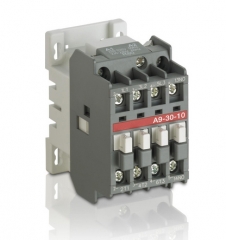
ABB 5SGX1060H0003 AC contactor, as a key equipment in the field of industrial electrical control, plays an important role in control and protection in many electrical systems. It can frequently connect and disconnect AC circuits, effectively control various AC loads, and is widely used in many fields such as manufacturing, energy industry, transportation, etc. that require extremely high electrical control reliability. With the profound foundation of ABB brand in the fields of power and automation technology, this AC contactor integrates advanced design concepts and exquisite manufacturing processes, providing solid guarantees for efficient and stable operation of industrial production.
Core functions
Circuit on-off control: This is the core function of AC contactors. When the electromagnetic coil is powered on, it generates a magnetic field that attracts the moving iron core, drives the contact to move, closes the main contact, and connects the circuit, thereby achieving power supply to the AC load; When the electromagnetic coil is powered off, the magnetic field disappears, and the moving iron core returns to its original position under the action of the reset spring, causing the main contact to disconnect and cutting off the circuit. Through this method, it is possible to efficiently and accurately control the on/off of AC circuits to meet the operational needs of different devices.
Undervoltage and Loss of Voltage Protection: Equipped with undervoltage and loss of voltage protection functions. When the circuit voltage drops to a certain level (usually below 70% of the rated voltage) or suddenly loses power, the electromagnetic attraction of the AC contactor weakens or disappears, the moving iron core is released, the main contact quickly disconnects, and the circuit is automatically cut off. When the voltage returns to normal, manual re operation is required to re engage the contactor and restore power supply to the circuit. This protection function can effectively prevent equipment damage and production accidents caused by abnormal voltage, ensuring the safety of equipment and personnel.
Remote control: Supports remote control function and can be operated remotely through control circuits. In an automated production system, operators can send control signals to the electromagnetic coil of the AC contactor through control buttons, PLC (Programmable Logic Controller) or other remote control devices in the control room, achieving remote control of the AC contactor and thus controlling the operation status of the equipment. This remote control function greatly improves the convenience and automation level of production operations, facilitating centralized management and scheduling of large-scale production processes.
Working principle
Working principle of electromagnetic mechanism: The electromagnetic mechanism of 5SGX1060H0003 AC contactor is mainly composed of electromagnetic coil, static iron core, dynamic iron core (armature) and other parts. When an electromagnetic coil is connected to a suitable AC power source, an alternating current will be generated in the coil. According to the Ampere's law, the alternating current will generate an alternating magnetic field around it. This alternating magnetic field acts on both the stationary and moving iron cores, causing the moving iron core to experience electromagnetic attraction. When the electromagnetic suction force is greater than the reaction force of the reset spring, the moving iron core begins to move towards the stationary iron core, driving the contact system connected to the moving iron core to move.
Working principle of contact system: The contact system is divided into main contacts and auxiliary contacts. The main contact is used to connect and disconnect the main circuit, carrying a large current; Auxiliary contacts are used to control circuits, achieve signal transmission and interlocking control functions. When the moving iron core moves towards the stationary iron core under the action of electromagnetic attraction, the main and auxiliary contacts connected to it move accordingly. Close the main contact, connect the main circuit, and enable the load to obtain power and start working; The normally open contact of the auxiliary contact is closed, and the normally closed contact is disconnected, achieving the corresponding control signal switching. When the electromagnetic coil is powered off, the electromagnetic attraction disappears, and the moving iron core returns to its original position under the action of the reset spring. The contact system also resets accordingly, the main contact is disconnected, the main circuit is cut off, and the auxiliary contact returns to its initial state.
Technical parameters
Rated working voltage: Common rated working voltages include various specifications such as 220V AC and 380V AC, which can be selected according to different application scenarios and electrical system requirements. They can adapt to diverse power grid environments and ensure stable operation under different voltage conditions.
Rated working current: The rated working current has a wide range, such as 100A, 200A, and other different levels, which can meet the control requirements of various AC loads with different powers. Whether it is motor control for small equipment or electric drive for large industrial equipment, suitable specifications of 5SGX1060H0003 AC contactors can be found.
Rated insulation voltage: Generally, it has a high rated insulation voltage, such as 690V AC, which can effectively isolate high voltage in the circuit, prevent electric shock accidents, ensure the safety of operators and equipment, and enhance the adaptability and reliability of the product in complex electrical environments.
Rated voltage of coil: There are also multiple options for rated voltage of coil, such as 24V AC/DC, 110V AC/DC, 220V AC/DC, etc., which facilitate users to flexibly choose according to the power configuration of the control system and achieve precise control of the AC contactor.
Mechanical lifespan: Long mechanical lifespan, up to millions or even higher, means that under normal use, the mechanical components of AC contactors can withstand frequent actions without serious wear or failure, greatly reducing equipment maintenance frequency and replacement costs, and improving the stability and continuity of the production system.
Electrical lifespan: The electrical lifespan also performs well, reaching hundreds of thousands of times or more. During frequent circuit connections and disconnections, the contacts can maintain good conductivity and arc resistance, reducing contact erosion and adhesion, ensuring the long-term reliability of AC contactors in terms of electrical performance, and extending the overall service life of the product.
Precautions
Installation environment requirements: It should be installed in a dry, well ventilated, non corrosive gas and less dust environment. A humid environment may cause electrical components to short circuit, corrosive gases may corrode equipment components, excessive dust may affect heat dissipation, thereby reducing the performance of AC contactors and even damaging equipment. The installation location should be away from heat sources and strong electromagnetic interference sources to avoid excessive temperature affecting product life and electromagnetic interference causing AC contactor misoperation.
Electrical connection specifications: When making electrical connections, it is necessary to strictly follow the requirements of the product manual. Ensure that the wiring is secure and reliable to prevent poor contact from causing heating, sparking, or even burning out the equipment. Before wiring, carefully check the parameters such as power supply voltage and load current to ensure they match the rated parameters of the AC contactor. At the same time, attention should be paid to distinguishing the wiring between the main circuit and the control circuit to avoid short circuits or other electrical faults caused by incorrect wiring.
Daily maintenance: Regularly inspect and maintain the AC contactor, observe whether the contacts are burned or worn, whether the electromagnetic mechanism operates flexibly, and whether the wiring terminals are loose. If severe contact erosion is found, it should be polished or replaced in a timely manner; For loose wiring terminals, they should be tightened in a timely manner. Regularly clean the dust and debris on the surface of the communication contactor, keep the equipment clean, to ensure its normal heat dissipation and reliable operation. During maintenance, live operation is strictly prohibited. The power must be cut off first and necessary safety protection measures must be taken.
Application scenarios
Manufacturing: Widely used in the control of various motors on automated production lines in the manufacturing industry. In machine tool equipment, it is used to control the start, stop, and forward/reverse rotation of spindle motors and feed motors to ensure precise machining of the machine tool; In automated assembly equipment, control conveyor belt motors, robotic arm motors, etc. to achieve efficient assembly of products. By precisely controlling the operation of the motor, production efficiency is improved and product quality is ensured.
Energy industry: In power plants, motors are used to control various auxiliary equipment such as fans, pumps, and oil pumps. For example, in thermal power plants, controlling the motors of the air supply fan and induced draft fan ensures good ventilation in the furnace; In hydropower stations, control the cooling water pump motor to ensure the normal cooling of the generator set. In substations, it can be used to control the switching of capacitors and contactors, achieve reactive power compensation, improve the power factor of the power grid, and ensure the stable operation of the power system.
Transportation industry: In the field of rail transit, it can be used to control traction motors, auxiliary motors, etc. of electric trains. By controlling the on/off of the AC contactor, the switching of the train's starting, accelerating, braking and other operating states can be achieved, ensuring the safe and smooth operation of the train. In electric vehicle charging stations, it is used to control the on/off of the charging circuit, achieving fast and safe charging of electric vehicles.
In the field of architecture, in the electrical control system of intelligent buildings, motors are used to control equipment such as air conditioning systems, lighting systems, and water supply and drainage systems. For example, controlling the start and stop of the air conditioning compressor motor to regulate indoor temperature; Control the contactors in the lighting distribution box to achieve centralized control and zoning control of lighting fixtures, achieving the goals of energy conservation and intelligent management.
- OMRON
- ABB
- General Electric
- EMERSON
- Honeywell
- HIMA
- ALSTOM
- Rolls-Royce
- MOTOROLA
- Rockwell
- Siemens
- Woodward
- YOKOGAWA
- FOXBORO
- KOLLMORGEN
- MOOG
- KB
- YAMAHA
- BENDER
- TEKTRONIX
- Westinghouse
- AMAT
- AB
- XYCOM
- Yaskawa
- B&R
- Schneider
- KONGSBERG
- NI
- WATLOW
- ProSoft
- SEW
- ADVANCED
- Reliance
- TRICONEX
- METSO
- MAN
- Advantest
- STUDER
- DANAHER MOTION
- Bently
- Galil
- EATON
- MOLEX
- DEIF
- B&W
- ZYGO
- Aerotech
- DANFOSS
- Beijer
- Moxa
- Rexroth
- Johnson
- WAGO
- TOSHIBA
- BMCM
- SMC
- HITACHI
- HIRSCHMANN
- Application field
- XP POWER
- CTI
- TRICON
- STOBER
- Thinklogical
- Horner Automation
- Meggitt
- Fanuc
- Baldor
- SHINKAWA
- Other Brands
- UniOP
- KUKA
- Iba
- Beckhoff
- ADLINK
-
 SIGMATEK TAE731 Touch Display Unit
 -
 SIGMATEK CDM167 Module 12-008-167-O
 -
 SIGMATEK TO161 Digital Output Module
 -
 Sigmatek NC4 45291000003 Control Board
 -
 Sigmatek HGW1033-3 Handheld Wireless Unit
 -
 Sigmatek CAI0811 Analog Input Module
 -
 Sigmatek STO081 S-DIAS Safety Output Module
 -
 Sigmatek C-IPC 01-450-171-V Industrial PC
 -
 Sigmatek S1 032-8AF61-R4 EZ Servo Motor
 -
 Sigmatek CM5V020 Baseplate 12-250-021-K
 -
 Sigmatek HGT833-W Panel
 -
 Sigmatek NC4 45291000003 Control Module
 -
 SIGMATEK 12-780-012 R8-IPC Geode LX800
 -
 SIGMATEK CCP081 Processor Module
 -
 SIGMATEK SCP011 S-DIAS Safety CPU
 -
 SIGMATEK ETT1533 Touchscreen 01-230-1533
 -
SIGMATEK AI043 Analog Input Module
-
 SIGMATEK CTMS020 Control Module
 -
 SIGMATEK SLIDES VARAN Interface VAC 012
 -
 SIGMATEK Compact Control Unit 06038666
 -
 SIGMATEK CP112 Control Module
 -
 SIGMATEK MDP 101-1 Power Supply Module
 -
 Sigmatek CCP621 C-SLIDES Processor Module
 -
Sigmatek MDD111 Axle Module
-
 Sigmatek CCL912 C-SLIDES CPU PSU Module
 -
Demag NC4 0332.554.03 Sigmatek Control Board
-
Sigmatek Krauss Maffei PC321-K Control Cabinet PC
-
 Sigmatek CNC W150 Circuit Board Wittmann Robot
 -
 Sigmatek AKM44G-ANCNGBB0 Servo Motor
 -
 Sigmatek CSCP011 Safety Module 12-890-011
 -
 Mannesmann Demag Sigmatek CP126 Central Unit
 -
 Sigmatek ISE021 Interface Module 20-101-021
 -
Sigmatek CCP251 C-DIAS Processor Module
-
 SIGMATEK ET 352 Terminal
 -
SIGMATEK SV141 Module 20-023-141
-
 SIGMATEK NC-337 3 Axis Module
 -
 Sigmatek MDP 101 Power Module
 -
SIGMATEK HGT834-W Teach Pendant
-
Sigmatek C-DIAS Processor Module CCL912
-
 SIGMATEK CP627 Module
 -
 SIGMATEK PC 323-K Controller
 -
SIGMATEK MDD121 Controller Module
-
 SIGMATEK ICA111 Module
 -
SIGMATEK MDD 121-1 Drive Axis Module
-
SIGMATEK M5V121 12-300-121 Krauss Maffei M5 Display Unit
-
SIGMATEK CTMS 020 CD Technology Module 12-250-011
-
 SIGMATEK PCT122 Touch Panel
 -
 Stöger MCS4100 SIGMATEK Control Module
 -
 SIGMATEK Krauss Maffei M5 Keyboard Unit M5K902 12-310-902
 -
 SIGMATEK SD310-2 Servo Drive Module
 -
SIGMATEK CM5V020 CD Wiring Circuit Module
-
SIGMATEK ENGEL Robot Drive M3 02220-8748
-
 Sigmatek CFF011 Drive Module
 -
 Sigmatek DCP642 DIAS Central Unit
 -
 Sigmatek SDM081 S-DIAS Safety Module
 -
 Sigmatek C-IPC 01-450-024 Industrial PC
 -
Sigmatek Kompakt NC4 Control Module
-
Sigmatek VI021 VARAN Interface Module
-
Sigmatek Engel RD-M6-2 Robot Drive
-
Sigmatek CNC031 Positioning Module
-
Sigmatek TO161 Digital Output Module
-
Sigmatek CCL912 CPU PSU Module
-
Sigmatek ETV0821 Operator Terminal
-
 SIGMATEK ET 261 Operator Terminal
 -
 SIGMATEK CP731-K Control Module 20-004-731-K
 -
 SIGMATEK ETEK Motherboard 12-250-021-K CM5V020
 -
 Sigmatek DEZ 181 DIAS Input Output Module
 -
 Sigmatek IPC111-D Industrial PC
 -
SIGMATEK AKM54L-ANC2GBB0 Servomotor with Gearhead
-
SIGMATEK CTMS020 CM5V020 CNC Controller
-
 DEMAG ERGOTECH 061 381 66 Sigmatek Control Unit
 -
 Sigmatek DAI 883 Module
 -
 Sigmatek ETV1521 Control Panel Installation Terminal
 -
 Sigmatek 9802.289.01 Board Control TA71 Display
 -
 Wittmann Sigmatek EU-252 proDrive W4 Servo Drive
 -
 Sigmatek CDM166 C-DIAS Module
 -
Sigmatek DCP082 DIAS Central Unit
-
Sigmatek CCP081 C-DIAS Processor Module
-
Sigmatek MD111-1 Drive Module
-
Sigmatek ETV0821 Operator Terminal
-
 Sigmatek ISE021 Interface Module
 -
 Sigmatek DCC080L Slide Control Module
 -
Sigmatek AI075 Analog Input Module
-
SIGMATEK TO161 20-007-161 Module
-
SIGMATEK CIC011 Module
-
 SIGMATEK AE0000318502 Hand Terminal Pendant
 -
 Sigmatek Krauss Maffei PC323-K Control Unit
 -
Sigmatek Krauss Maffei PC321-K Control Cabinet PC
-
SIGMATEK CIV521 Control Module
-
SIGMATEK C-IPC-171 Industrial PC
-
 SIGMATEK MDP101-L DIAS Drive Network Module
 -
 Sigmatek Krauss Maffei PC323-K Control Cabinet PC
 -
SIGMATEK CRCH081 C-SLIDES Temperature Module
-
 Sigmatek PC301-E6 Industrial PC SSD
 -
 Sigmatek SDI101 S-SLIDES Safety Input Module
 -
 Sigmatek CIV521 VARAN Control Module
 -
Kollmorgen Sigmatek AKM42G-ANCNGBB0 Servo Motor
-
 Sigmatek PC 521 Process Controller
 -
 Sigmatek Geode LX800 12-780-012 Industrial PC
 -
 Sigmatek STO081 S-DIAS Safety Output Module
 -
 Sigmatek SCP111 S-DIAS Safety CPU Module
 -
 Sigmatek CDI161 Industrial I O Module
 -
Sigmatek Wiring Board V2 DIAS 05-250-023
-
Sigmatek CP102 20-004-102 S-DIAS CPU Module
-
SIGMATEK SLIDES CNC 115 Module
-
 SIGMATEK DCC080 05-700-080-2 Control Module
 -
SIGMATEK MDD 121 Drive Axis Module
-
 SIGMATEK CIO011 C-DIAS Multi I/O Module
 -
SIGMATEK CIV512 Servo Drive
-
 SIGMATEK CM5V020 12-250-021-K Wiring Module
 -
 SIGMATEK CIO011 12-013-011 Multi I/O Module
 -
SIGMATEK 01-450-031 C-IPC Industrial Computer
-
SIGMATEK AKM24D-ANBNGBB0 Servo Motor
-
 DEMAG NC4 LP0001289.03 Control Module
 -
Sigmatek ETEK Industrial PC C-IPC with Option Module
-
Sigmatek AO081 20-010-081 Analog Output Module
-
Sigmatek CNC 031 Positioning Module
-
Sigmatek CP731-K 20-004-731-K CPU Module
-
Sigmatek MDD 3320-JR-A Drive Module
-
Sigmatek PM Servo Motor AKM52K-ANC2GBB0
-
Sigmatek MDP 101 09-403-101 Power Module
-
Sigmatek S-SLIDES AO046 Analog Output Module
-
Sigmatek ICA111 20-102-111 Interface Module
-
SIGMATEK DCP646 Module 05-004-646
-
SIGMATEK SDI101 Digital Input Module 20-891-101
-
 SIGMATEK S3330-2 Directional Gyro Altitude Instrument
 -
SIGMATEK MDP102-1 Controller
-
SIGMATEK SMT 01-230-321 Touch Screen


