
Motorola MVME Series IPMC712/761 I/O Module
Motorola MVME Series IPMC712/761 I/O Module
Basic Information
The installation and user manual for the Motorola MVME series IPMC712/761 I/O module introduces two multifunctional I/O modules based on the PMC (PCI Mezzanine Card) specification. The core is positioned as an extension component for MVME5100, MVME5500, and MVME6100 single board computers (SBC), providing industrial grade I/O interfaces such as SCSI, serial, and parallel, suitable for industrial control, embedded computing, and other scenarios, especially supporting backward compatibility with the old MVME761/MVME712M modules.
Module core functions and model differences
(1) Core functional positioning
IPMC712 and IPMC761 are both single width standard PMC modules, with the core function of expanding the host's I/O interface capabilities to meet the connection requirements of multiple types of devices in industrial scenarios. The common functions include:
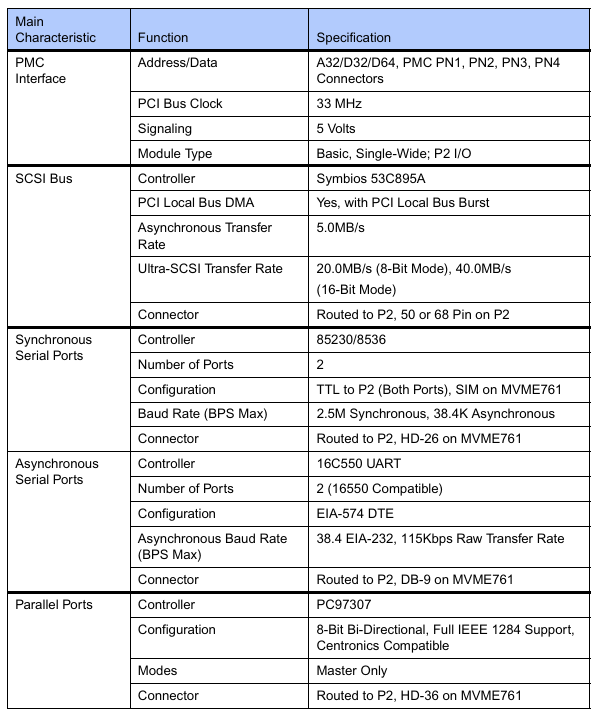
SCSI interface: Integrated LSI SYM53C895A controller, supports Ultra Wide SCSI (16 bit bus), synchronous transfer rate up to 40MB/s (16 bit mode), 20MB/s (8-bit mode), asynchronous transfer rate 5MB/s, suitable for industrial storage devices such as hard drives and optical drives;
Serial Communication: Equipped with Z85230 ESCC (Enhanced Serial Communication Controller) and PC97307 Super I/O chip, providing multi-channel serial ports, supporting asynchronous/synchronous modes, and adapting to serial devices such as modems and sensors;
Parallel port: Supports IEEE 1284 standard, 8-bit bidirectional communication, compatible with Centronics interface devices (such as industrial printers, data collectors);
PCI-ISA Bridge: The bridge between the PCI bus and ISA bus is achieved through the Winbond W83C554F chip, supporting ISA interrupt and DMA functions to ensure legacy device compatibility;
Data storage: Onboard 256 × 8 serial EEPROM (AT24C02), used to store Vital Product Data (VPD) and record module hardware configuration information.
(2) Core differences between IPMC712 and IPMC761
The two module architectures are consistent, with the main difference being the serial port configuration and physical interface design. The specific differences are as follows:
Comparison dimension IPMC712 IPMC761
Number of serial ports: 3 asynchronous ports+1 configurable (asynchronous/synchronous) port, 2 asynchronous ports+2 configurable (asynchronous/synchronous) ports
Serial clock configuration port 4 can be set with J2/J3/J5 jumper for transmitting and receiving clocks, supporting loop back (J5 jumper). Port 3/4 can only be set with J2/J3 jumper for transmitting and receiving clocks, without loop back function
Ethernet compatibility backboard Ethernet port unavailable (needs to be extended through P2 adapter) Support backboard Ethernet port routing (needs to be coordinated with MVME761 transition module)
Typical application scenarios focus on simple serial communication extensions, such as sensor data acquisition emphasizing multi serial device connections, such as industrial bus gateways and multi node communication
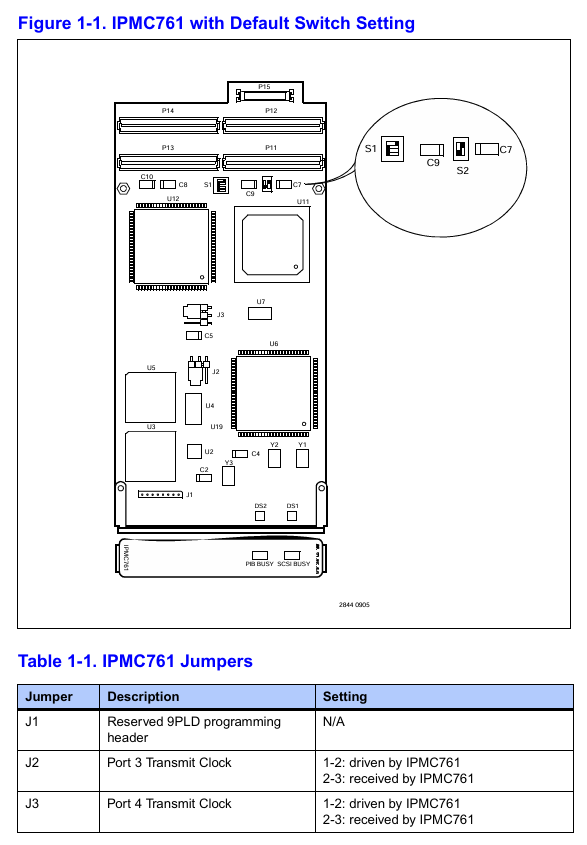
Hardware architecture and key components
(1) Hardware architecture diagram
The module is designed based on the architecture of "PCI bus → bridge chip → functional subsystem", and the core components include:
PCI interface layer: connected to the host PCI bus (32-bit, 33MHz) through P11-P15 connectors, supporting PCI bus arbitration and burst transmission to ensure data transmission efficiency;
Bridge layer: Winbond W83C554F (PIB, PCI-ISA bridge) implements protocol conversion between PCI and ISA bus, supports 8259 interrupt controller and ISA DMA channel;
Functional subsystem:
SCSI subsystem: LSI SYM53C895A controller+40MHz clock, supporting wide bus and high-speed transmission;
Serial subsystem: Z85230 ESCC (2-channel synchronous/asynchronous)+Z8536 CIO (supplementary modem control signal);
Parallel subsystem: PC97307 Super I/O chip, supporting IEEE 1284 mode;
Configuration and Storage: 2 user configurable switches (S1/GPIO configuration, S2/IDSEL selection), AT24C02 EEPROM (VPD storage).
(2) Key electrical parameters
Parameter category specification requirements
Supply voltage+5V (± 5%), ± 12V (± 10%); Typical power consumption:+5V/0.5A,+12V/0.2A, -12V/0.1A; Maximum power consumption:+12V/0.5A, -12V/0.3A
Working temperature 0~70 ℃ (PCB working temperature), storage temperature -40~85 ℃
Isolation and anti-interference support ESD protection (compliant with IEC 61000-4-2), surge protection (IEC 61000-4-5), PCI signal level 5V standard
Connectors P11~P15 (64 pin EIA-E700 connector), supporting PCI interface and I/O signal output
Hardware configuration and installation requirements
(1) Core configuration items
S1 switch (GPIO configuration): 1 × 4 switch, used to set SCSI speed and bus width:
S1-P1(GPIO2):OFF=Ultra SCSI(20/40MB/s),ON=FAST SCSI(10/20MB/s);
S1-P2 (GPO3): OFF=Wide SCSI (16 bits), ON=Narrow SCSI (8 bits);
S1-P3/P4: Not used (NC).
S2 switch (IDSEL selection): 1 × 2 switch, select the IDSEL signal connection of the PCI device according to the host model:
MVME5100/MVME5500: S2-P1=ON, S2-P2=OFF (connected to AD11);
MVME6100: S2-P1=OFF, S2-P2=ON (connected to AD16/AD21);
Prohibit simultaneous ON/OFF of two switches (to avoid abnormal device enumeration).
Jumper configuration:
IPMC712: J1 (reserved programming interface), J2/J3 (port 4 clock source), J5 (clock loop back);
IPMC761: J1 (reserved), J2/J3 (source of clock for port 3/4 transmission and reception).
(2) Installation specifications
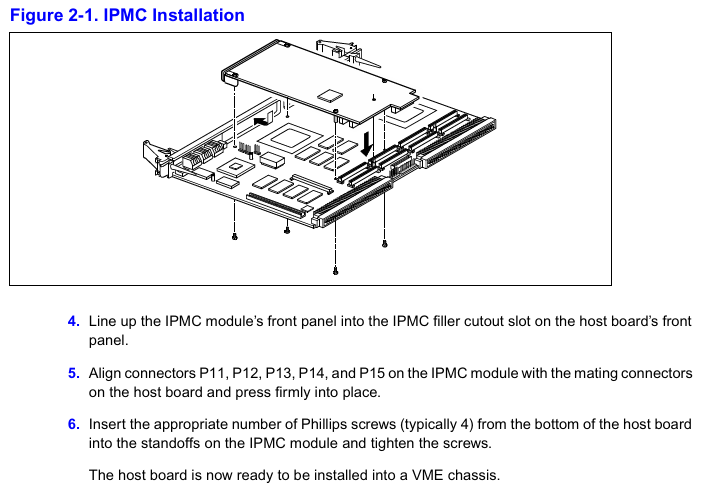
Installation position: Only supports installation in PMC slot 1 of the host. Before installation, the filler plate of the host front board needs to be removed to ensure that the module front board is aligned with the host front board;
Static protection: An anti-static wristband must be worn, and the module should be stored in anti-static packaging to avoid touching the circuit board pins;
Mechanical fixation: Fix the module on the host bracket with 4 M2 screws, ensuring that connectors P11-P15 are fully engaged with the host socket;
EMI compliance: After installation, ensure that all panel openings of the host are covered by modules or filler boards to avoid electromagnetic interference leakage.
Programming and Compatibility
(1) Core points of programming
PCI device configuration:
The onboard PCI device includes a SCSI controller (vendor ID 0x1000, device ID 0x0012) and a PCI-ISA bridge (vendor ID 0x10A, device ID 0x0565), which require setting interrupt and DMA parameters through the PCI configuration space;
IDSEL address mapping: Ensure device enumeration uniqueness based on the host model corresponding to AD11 (MVME5100/5500) and AD16/AD21 (MVME6100).
Interrupt and DMA configuration:
Interrupt routing: SCSI interrupts (IRQ14) and serial/parallel interrupts (IRQ3/4/7/9/10) are bridged to the host MPIC (Multiprocessor Interrupt Controller) through PIB, with different interrupt pin assignments for different hosts (such as IRQ0/9 for MVME5100 and MPP5/16 for MVME6100);
DMA channels: Supports 7 ISA DMA channels, with channels 0/1/5/6 for serial port transmission and reception, channels 2/3 for parallel ports, and channel 4 for internal cascading.
VPD access: Access the onboard EEPROM (address 0xA4) through the I ² C bus to read configuration information such as module model and hardware version. The host needs to access it through the I ² C controllers of Hawk (MVME5100), GT-64260 (MVME5500), and MV64360 (MVME6100).
(2) System compatibility
Adaptation host: Only supports MVME5100, MVME5500, and MVME6100 single board computers, and S2 switch and interrupt mapping need to be configured according to the host model;
Backward compatibility: Supports replacing old MVME761/MVME712M modules and achieving I/O signal compatibility through P2 transition cables, but attention should be paid to some PMC I/O routing restrictions (such as IPMC712 not supporting backplane Ethernet);
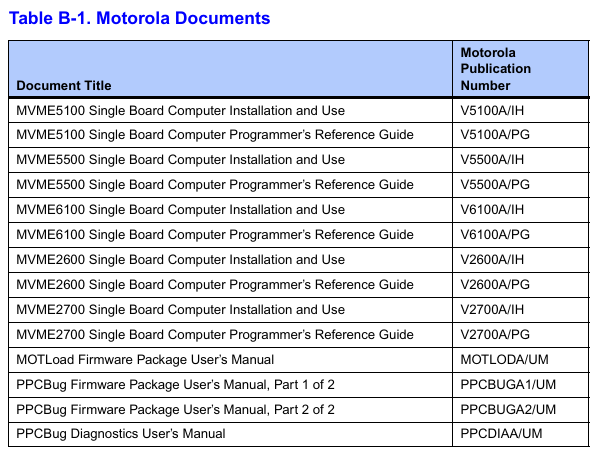
Software support: Compatible with Motorola PowerPlus II architecture programming specifications, requiring the use of firmware tools such as MOTLoad and PPCBug for configuration and debugging.
Environmental adaptability and compliance certification
(1) Environmental parameters
Environmental category specification requirements
Temperature operation: 0~70 ℃ (compliant with IEC 60068-2-1/2); Storage: -40~85 ℃ (compliant with MIL-STD-810G)
Humidity 20%~95% (40 ℃ without condensation, in accordance with IEC 60068-2-78)
Vibration and shock operation vibration: 5~60Hz (0.137mm), 60~150Hz (1.0G, in accordance with IEC 60068-2-6); Storage impact: 15G (11ms, compliant with IEC 60068-2-27)
The protection level module body is IP20 (compliant with IEC 60529) and needs to be installed in control cabinets with a protection level of IP54 or higher
(2) Compliance certification
Electromagnetic compatibility (EMC): compliant with EN 55022 Class B, EN 61000-6-2/4, resistant to ESD (± 8kV air discharge), surge (± 2kV communication port);
Safety certification: CSA ordinary area certification, Class I Division 2 Groups A-D hazardous area (non flammable);
Environmental Compliance: Compliant with RoHS Directive (Restriction of Hazardous Substances) and WEEE Directive (Electronic Waste Recycling).
Precautions for use
SCSI signal conflict: When installing other modules in host PMC slot 2, it is important to note that there may be conflicts with the SCSI signal (P15 connector), and the redundant signal should be disconnected through a 0 Ω resistor (R92-R100);
Clock configuration: The serial port clock source needs to be strictly matched through jumper wires (such as distinguishing between "module driver" or "external input" for IPMC712 port 4 clock) to avoid communication abnormalities;
Firmware and documentation: The module needs to be used in conjunction with the host firmware (such as the Hawk ASIC firmware of MVME5100). It is recommended to refer to the host manual to confirm the details of interrupt and DMA configuration.
- OMRON
- ABB
- General Electric
- EMERSON
- Honeywell
- HIMA
- ALSTOM
- Rolls-Royce
- MOTOROLA
- Rockwell
- Siemens
- Woodward
- YOKOGAWA
- FOXBORO
- KOLLMORGEN
- MOOG
- KB
- YAMAHA
- BENDER
- TEKTRONIX
- Westinghouse
- AMAT
- AB
- XYCOM
- Yaskawa
- B&R
- Schneider
- KONGSBERG
- NI
- WATLOW
- ProSoft
- SEW
- ADVANCED
- Reliance
- TRICONEX
- METSO
- MAN
- Advantest
- STUDER
- DANAHER MOTION
- Bently
- Galil
- EATON
- MOLEX
- DEIF
- B&W
- ZYGO
- Aerotech
- DANFOSS
- Beijer
- Moxa
- Rexroth
- Johnson
- WAGO
- TOSHIBA
- BMCM
- SMC
- HITACHI
- HIRSCHMANN
- Application field
- XP POWER
- CTI
- TRICON
- STOBER
- Thinklogical
- Horner Automation
- Meggitt
- Fanuc
- Baldor
- SHINKAWA
- Other Brands
- UniOP
- KUKA
- Iba
- Beckhoff
- ADLINK
-
 GE IS2I5WEMAHIA+IS210BPPBHZCAA Mark VIe Safety Controller & I/O Module Set
 -
 GE IS2I5AEPAHICH+IS210BPPBHZCAA Mark VIe Analog I/O Control Module Set
 -
 GE IS2I5WECAH1B+IS2108PPBHZCAA Mark VIe Controller Redundant I/O Set
 -
 VMIC HSDA 332-000111 Scanning Analog-to-Digital Converter Module
 -
 GE VMIC VMIVME1150B VME Module
 -
 FANUC VMIVME3128 VME Digital I/O Board
 -
 GE Fanuc VMIVME-7697-350 VMEbus Single Board Computer
 -
 GE Fanuc VMIVME-4150 PLC Board
 -
 FANUC VMIVME-1160A VMEbus Module
 -
 GE Fanuc VMIVME-4116 VMEbus CPU Processor Controller
 -
 FANUC VMIVME-9300 VMEbus Module
 -
 VMIVME-7589A Pentium VMEbus CPU Board
 -
 GE Fanuc VMIPCI-7767-13100 PCI Board
 -
 GE Fanuc VMIVME-4140 VMEbus Module
 -
 IS415UCVGH1A VME Controller Card
 -
 VMIC VMIVME-1150 VME Circuit Board
 -
 VMIC VMIVME7589 Processor Board
 -
 FANUC VMIVME-2200 VME Circuit Board
 -
 IS215UCVEH2A VME Controller Card
 -
VMIC VMIVME-7589A-446 VMEbus CPU SBC
-
 VMIC VMIVME-7658-330 VME Single Board Computer
 -
 VMIC SEMIVISION OPAL VMEbus CPU Module with VMIVME-7588
 -
GE Fanuc VMIVME-4140 VME Module
-
 Abaco VMIVME 2532A 32-Bit High-Voltage Digital I/O Board – VMEbus
 -
 VMIC VMIVME 100-Pin VME Bus I/O Cables
 -
 VMIC ASSY 11994R13 VMEbus Module
 -
 GE Fanuc VMIVME 1182 VMEbus Input Board – 332-011182-030A
 -
VMIC VMIVME-7589 VMEbus Module with VMIVME-7434
-
 VMIC VMIVME-7588-787 Single Board Computer – 332-250236
 -
 VMIC 7487A VMEbus CPU Board – 332-107487-033 H
 -
 FANUC VMIVME-3125 VMEbus Analog Input Board
 -
 VMIC VMIVME 6015 VMEbus Board – 332-006015-000
 -
 VMIC ASSY 11993R2 VMEbus Module
 -
 Cisco 2851 Router with VMIC2-1MFT-T1/E1 Module
 -
 Applied Materials VMIC 7505 800MHz CPCI SBC
 -
VMIVME-2534-046D 32-Bit High-Voltage Digital I/O Board
-
 VMIC 5530M Optical Extender PCB Board
 -
 GE VMIC XVB602 Control Module
 -
 VMIVME-6005-020 Octal ARINC-429 Controller
 -
 VMIC VMI PCI 3322 Board
 -
 FANUC VMIVME-7487 VME Processor Board
 -
 VMIC 332-800576-000A VMIACC 0576 Module
 -
 VMIC VMIVME-7805-231000 VME Board
 -
 ABACO VMIC VMICBL-000-F3-102 Reflective Memory Cable
 -
 VMIC 332-000131-B VMIVME PCB Card
 -
VMIC 320-250236 with VMIVME-7588 Processor Board
-
 VMIC ASSY 12149 Module
 -
 FANUC VMIC VMIVME5010 I/O PCB Board
 -
 VMIC VMIVME-7698-345 VME Single Board Computer
 -
IS215UCVEH2A VME Controller Card
-
 VMIC VMIVME-7658-330 VME Single Board Computer
 -
 VMIC VMIPCI-5790-000 Dual-Channel Ultra160 SCSI Adapter
 -
 VMIC VMICPCI-7756-460 Single Board Computer
 -
 VMIVME-4920 Dual Channel Digital Converter Board – VMEbus
 -
GE Fanuc VMIVME-4140 VMEbus Module
-
 VMIC VMIPMC-7440 PMC Sound Card
 -
 VMIC PCI 4320 VMEbus Board-333-854320-000
 -
VMIC VMIVME 5530S VMEbus Interface Module
-
 FANUC 332-999995-000 VMEbus PCB Assembly
 -
FANUC VMIVME-4116-030 VMEbus Module
-
VMIC VMIVME-7658-330 VMEbus Single Board Computer
-
VMIC VME-2532A VMIVME2532A-413 Digital I/O Board
-
 VMIC VMIVME-7696-650 VMEbus Processor Board
 -
VMIC VMIVME-7487A Mainframe Board
-
 GE Fanuc VMIVME-2120-175 Digital Output Board
 -
 Abaco VMIVME-4125A-000 System Test Calibration Board
 -
 VMIC VMICPCI-5579 Reflective Memory PCI Board
 -
 FANUC A860-2000-X003 Encoder Interface Module
 -
FANUC 332-999992-000 VME Module
-
 VMIC VMIVME-7698 VME Module
 -
FANUC A860-2000-X003 Encoder Interface Module
-
 VMIC 333-657755-000 B LSC-3 4201 Board
 -
VMIVME-9304 CPU Board with NEC FGA-002A Interface Chip
-
VMIC VMIVME-7805 VMEbus Board – VMIVME-7805-234001
-
VMIC 332-000131-000M01 VMIVME PCB Card
-
 FANUC GE VMIC VMIVME 2510B Digital I/O Board
 -
 VMIC VMIPMC-5795-000 PMC Ultra160 SCSI Adapter
 -
GE Fanuc VMIVME 5588 High-Speed Reflective Memory Board
-
 VMIC VMIVME 4132 VMEbus Analog Output Board
 -
 VMIC VMIVME-3418 8-Channel Strain Gauge and RTD Board
 -
 VMIC VMIPMC-5797-000 Ultra320 SCSI Host Bus Adapter
 -
 VMIC VMIACC 0562 Accessory Module
 -
Abaco VMIVME 4116 8-Channel 16-Bit Analog Output Board
-
 VMIC VMIVME 4512 Analog I/O Board – 332-004512-300
 -
 VMIC VMIVME 4120 VMEbus Circuit Board – 332-004120
 -
 VMIC VMIVME-3801-100C Analog-to-Digital Converter Module
 -
IS215UCVEH2AE VME Controller Card
-
 FANUC 333-00DMA0-000 VME Module
 -
GE Fanuc VMIVME-5588-200 High-Speed Reflective Memory Card
-
VMIC VMIVME-7696-650 VMEbus Single-Board Computer
-
 GE Fanuc VMIVME-5532S VMEbus Fiber-Optic Repeater Link
 -
 VMIC GE EV-DIO-01 Control Board
 -
 Abaco VMIVME-7751 Pentium III VME Single Board Computer
 -
 PMC-5565PIORC-110000 128MB Reflective Memory Card
 -
 Abaco VMIVME-5565-010000 Reflective Memory Board
 -
 VMIC VMIPMC-5565 Reflective Memory PMC Module
 -
 VMIC VMIVME 5504 Slave VME Module
 -
 VMIC VMIVME-5740-12000 VMEbus Hard Drive Module
 -
 VMIC VMIVME-7751 VMEbus Processor Module
 -
VMIC VMIVME-7588 CPU Module
-
 VMIC 332-000132 VMIVME PCB Card
 -
 GE Fanuc VMIVME-4514A Analog I/O Board
 -
 Abaco VMIVME-2528-000 128-Bit TTL Digital I/O
 -
 VMIC VMIVME 4514 Scanning Analog I/O Board
 -
 VMIPCI 5588-101 High Speed Fiber Optic Reflective Memory Card
 -
 VMIC VMIVME-1228 VMEbus Board
 -
 VMIC VMIVME-7455 CD-ROM Drive Module
 -
 VMIC VMIACC 0577 Compact PCI Board
 -
IS415UCVGH1A VME Controller Card
-
 VMICPMC-5664 VME PMC Dual Fiber Card
 -
VMIVME1128 128-Bit High-Voltage Digital Output Board
-
VMIC VMIVME-2170A VMEbus PCB Board
-
VMIC 332-015565-010L VME Module
-
 VMIC VMICPCI-7612-470 Single Board Computer
 -
 VMIC EV-CNT/01 Control Board
 -
 VMIC VMIVME 1181 VMEbus Input Board – 333-001181-000 A
 -
VMIC VMIVME-1150 VMEbus Module
-
 VMIC VMIVME-5576 VMEbus Module
 -
 VMIC VMIVME-4150 VMEbus Module
 -
 VMIC VMIOMAX-8001B PLC Rack
 -
 VMIC VMIVME 2128 High-Voltage Digital Output Board
 -
VMIC VMIVME-1111 64-Bit High-Voltage Digital Input Board
-
GE Fanuc VMIVME 1182 VMEbus Input Board – 332-011182-060C
-
 VMIC VMIVME-7696 VMEbus PC Board
 -
 VMIC VMIVME-7686 VMEbus Module
 -
 GE VMIVME-7486 VME PCB Board
 -
VMIC VMIVME-7740-840 Processor Module
-
 VMIC VMIACC BT01 REV 0 Transition Board


