
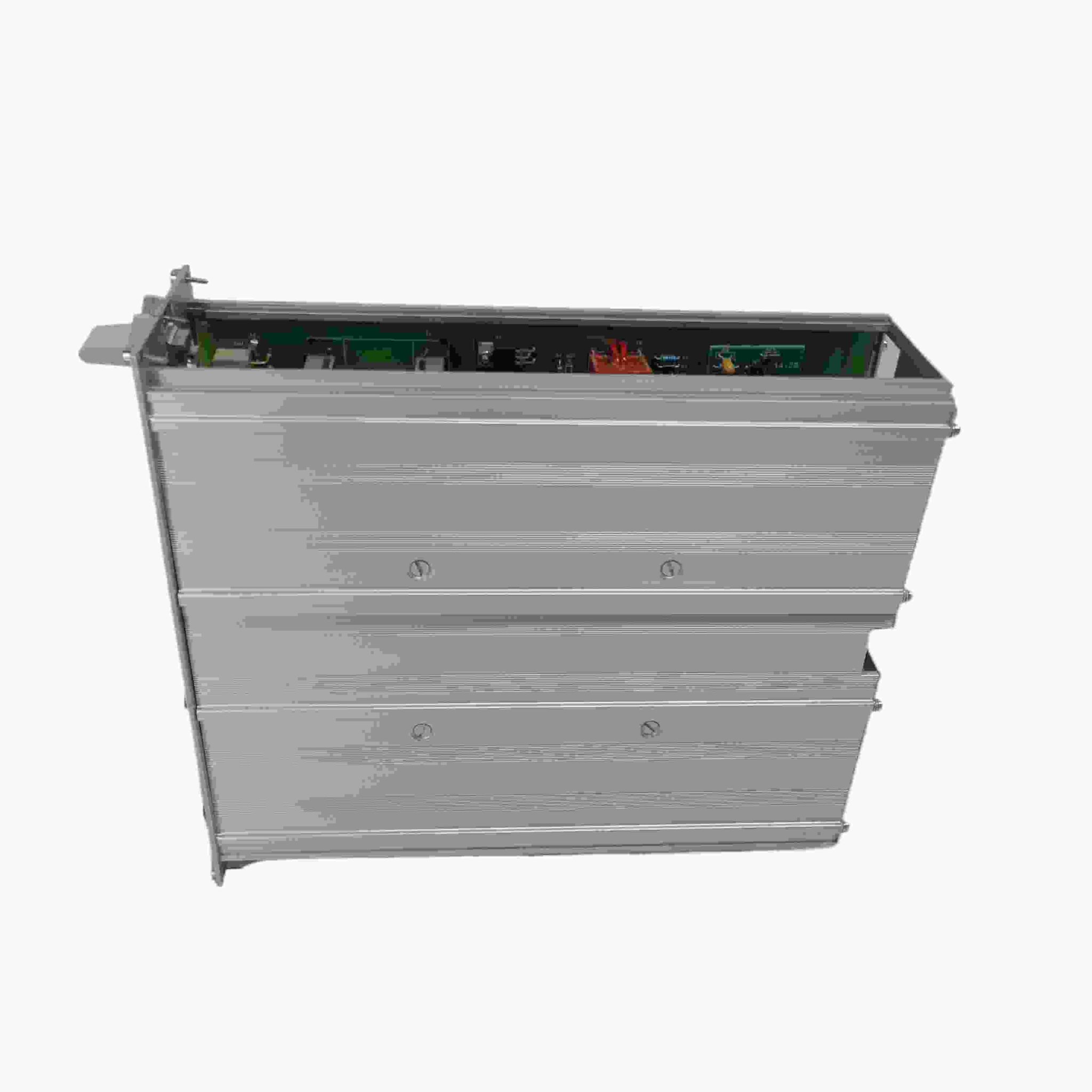
ALSTOM N897164611M High Performance Control Module
ALSTOM N897164611M High Performance Control Module
Functional characteristics
data acquisition and processing
This module has excellent data collection capabilities and can quickly and accurately receive data from various sensors and other external devices. Both analog data such as temperature, pressure, and flow rate, as well as digital data such as position and switch status, can be efficiently collected. Moreover, it integrates high-performance processors internally, which can perform real-time analysis, calculation, and processing of collected data, providing accurate basis for subsequent control decisions. For example, on industrial production lines, real-time collection of equipment operating parameters can be used to determine whether the equipment is operating normally after processing.
Control signal output
It can generate and output diverse control signals for precise control and regulation of various actuators and systems in trains, vehicles, and industrial equipment, such as motors, valves, cylinders, etc. Through precise signal output, precise control of equipment motion speed, position, torque and other parameters is achieved to ensure stable operation of the equipment according to preset process requirements. In the automated production process, it is possible to accurately control the motor speed to adjust the material conveying speed or control the valve opening to adjust the liquid flow rate according to the production process requirements.
Rich communication interfaces
Equipped with various types of communication interfaces, such as Ethernet interface, serial port (RS-232/RS-485), CAN bus interface, etc. These interfaces enable the module to conveniently interact and communicate with other devices and systems, building a large and efficient industrial control network. With the help of Ethernet interfaces, high-speed data transmission can be quickly achieved with devices such as upper computers and PLCs, enabling remote monitoring and control; Through the CAN bus interface, stable communication and collaborative work can be achieved with other node devices on the bus.
Programmable and flexible configuration
With the characteristics of programmability and flexible configuration, users can set parameters, define functions, and write control logic for modules through professional programming software according to specific application scenarios and needs. Both simple sequential control and complex logical operations and closed-loop control can be easily implemented. This flexibility enables the module to be widely applied in projects with different industries and process requirements, greatly improving its versatility and applicability.
Fault diagnosis and monitoring
Built in comprehensive fault diagnosis and monitoring functions, capable of real-time monitoring of its own working status and the operation of connected devices. Once an abnormality is detected, such as communication failure, data error, equipment overload, etc., an alarm can be quickly issued and the fault information can be fed back to the upper computer or operator through the communication interface. At the same time, the module will automatically record detailed information such as the time and type of the fault occurrence, which facilitates subsequent troubleshooting and analysis, effectively ensuring the reliability and safety of the system, and reducing equipment downtime and maintenance costs.
Performance parameters
Electrical parameters
Input voltage: The working voltage range is relatively wide, usually between 24V and 110V, which can adapt to the application needs of different power environments. Whether it is low-voltage small equipment or high-voltage large industrial systems, they can be stably connected and work.
Output voltage: It can provide a stable 5VDC output voltage to provide reliable power supply for connected load devices, ensuring that the equipment operates normally at a stable voltage.
Input current: The maximum input current can reach 2A, which can meet the access requirements of some sensors or external devices with high current requirements, ensuring the stability of data acquisition and communication.
Processor speed: The equipped processor runs at a speed of up to 26MHz and has powerful data processing capabilities. It can quickly respond to various control instructions, efficiently process collected data, and achieve real-time and precise control of the device.
Memory capacity: Equipped with 128-256MB DDR memory, it provides sufficient space for data storage, program execution, and intermediate data processing, ensuring that the module can run smoothly under complex work tasks without experiencing lag or data loss due to insufficient memory.
communication parameters
Communication protocol support: Supports multiple common and widely used communication protocols, such as Modbus TCP/IP, Modbus RTU, DNP3, etc. This enables the module to seamlessly communicate with devices of different brands and types, making it easy to integrate into various industrial automation systems. For example, through the Modbus protocol, it is easy to exchange data and collaborate with devices such as PLCs and smart meters that support this protocol.
Interface type: Equipped with standard electrical interfaces, such as Ethernet interfaces, it can achieve high-speed and long-distance data transmission, with transmission rates up to 10/100Mbps or even higher, meeting communication scenarios with high data volume and real-time requirements; The RS-232 interface is suitable for short distance, low-speed data communication and is commonly used to connect debugging equipment, simple sensors, etc; The RS-485 interface has stronger anti-interference ability and longer transmission distance, which can stably transmit data in the complex electromagnetic environment of industrial sites, and can connect up to multiple node devices. The CAN bus interface plays an important role in industrial control networks due to its high-speed, reliable, and multi master communication characteristics, and is suitable for connecting devices that require extremely high real-time and reliability.
Environmental adaptability parameters
Working temperature range: It can work stably in harsh temperature environments, with a working temperature range from -20 ° C to+60 ° C. This allows the module to operate normally in cold northern winter outdoor equipment and hot southern summer high-temperature workshops without the need for additional temperature control equipment, greatly improving its applicability in different regions and working environments.
Storage temperature range: Even in non working conditions, the module can adapt to a wider range of temperature storage conditions, with a storage temperature range of -55 ° C to+125 ° C. This ensures that the module will not be damaged due to changes in environmental temperature during transportation, inventory, and other processes, extending its service life and reliability.
Humidity adaptability: It also has good adaptability to humid environments and can work normally in environments with relative humidity of 5% to 95% and no condensation phenomenon. Whether in humid coastal areas or production workshops in industries such as chemical and textile with high humidity, modules can perform tasks stably, ensuring the continuous operation of the system and preventing faults such as short circuits and corrosion caused by humidity issues.
Dimensions and physical characteristics
Size: The module adopts a compact design with external dimensions of 20cm x 20cm x 20cm. This small volume allows it to be easily integrated into various space limited control panels, control cabinets, or vehicle systems, without occupying too much installation space, facilitating system layout and design.
Weight: The weight is about 10kg, which ensures the stability of the electronic components and structure inside the module, and is not too heavy. It is easy to install, disassemble, and maintain, reducing the difficulty and labor intensity of manual operation.
Protective design: The shell is made of sturdy and durable materials, with a certain level of protection, which can effectively prevent dust and foreign objects from entering, and also provide good mechanical protection for internal electronic components. In complex industrial environments such as mines and cement plants with large amounts of dust, it is possible to ensure the normal operation of modules and reduce the occurrence of failures caused by external factors.
Application Fields
Railway transportation field
Train tracking and signal management: In the railway network, accurate tracking of trains and intelligent management of signals are achieved by collecting real-time information such as train position and speed, and communicating with the signal system. Ensure safe operating intervals between trains, control the display of signal lights reasonably, and guarantee the efficiency and safety of railway transportation.
Security mechanism control: Integrate automatic train protection (ATP) and other safety functions to monitor and control the real-time operation status of the train. Once abnormal situations are detected, such as overspeed or signal intrusion, corresponding safety braking measures will be immediately triggered to ensure the safe operation of the train and prevent accidents from occurring.
On board system diagnosis and communication: responsible for data collection, processing, and communication of the train's onboard system, transmitting various operating parameters of the train, such as vehicle status, equipment failure information, etc., to the central control system in real time, facilitating staff to timely understand the train's operating conditions, conduct remote diagnosis and maintenance, and improve the availability and reliability of the train.
Industrial automation field
Production line automation control: It can be used to control the start stop, speed adjustment, material handling system operation, and robot arm movements of various industrial production lines. By precise control signal output, the automation and intelligence of the production process can be achieved, improving production efficiency, reducing labor costs, and enhancing the consistency and stability of product quality.
Data Collection and Processing Center: As the core module of data collection and processing in industrial automation systems, it collects sensor data from various links on the production line, such as temperature, pressure, flow rate, position, etc., and performs real-time analysis and processing. Based on the processing results, optimize and adjust the production process to achieve refined control, improve resource utilization and production efficiency.
Equipment status monitoring and maintenance: Utilize its fault diagnosis and monitoring functions to monitor the operating status of production equipment in real time and predict possible equipment failures. Through early warning, staff can arrange maintenance plans in a timely manner, carry out preventive maintenance, avoid production interruptions caused by sudden equipment failures, reduce equipment maintenance costs, and extend equipment service life.
Other areas
Energy management system: used in energy industries such as electricity, oil, and natural gas to monitor and control various equipment and systems involved in energy production, transmission, and distribution processes. For example, in power plants, it is possible to control the start stop and load regulation of generator units, as well as monitor and adjust the power parameters of the grid to ensure stable and efficient energy supply.
Intelligent building control system: In large commercial buildings, office buildings and other intelligent buildings, it is responsible for centralized control and management of various mechanical and electrical equipment inside the building, such as elevators, air conditioning, lighting systems, etc. By collecting and analyzing data, intelligent operation of equipment can be achieved, achieving the goals of energy conservation, comfort, and convenience, and improving the management level and user experience of buildings.
- OMRON
- ABB
- General Electric
- EMERSON
- Honeywell
- HIMA
- ALSTOM
- Rolls-Royce
- MOTOROLA
- Rockwell
- Siemens
- Woodward
- YOKOGAWA
- FOXBORO
- KOLLMORGEN
- MOOG
- KB
- YAMAHA
- BENDER
- TEKTRONIX
- Westinghouse
- AMAT
- AB
- XYCOM
- Yaskawa
- B&R
- Schneider
- KONGSBERG
- NI
- WATLOW
- ProSoft
- SEW
- ADVANCED
- Reliance
- TRICONEX
- METSO
- MAN
- Advantest
- STUDER
- DANAHER MOTION
- Bently
- Galil
- EATON
- MOLEX
- DEIF
- B&W
- ZYGO
- Aerotech
- DANFOSS
- Beijer
- Moxa
- Rexroth
- Johnson
- WAGO
- TOSHIBA
- BMCM
- SMC
- HITACHI
- HIRSCHMANN
- Application field
- XP POWER
- CTI
- TRICON
- STOBER
- Thinklogical
- Horner Automation
- Meggitt
- Fanuc
- Baldor
- SHINKAWA
- Other Brands
- UniOP
- KUKA
- Iba
- Beckhoff
- ADLINK
-
 SIGMATEK ICA111 Module
 -
 SIGMATEK MDD 121-1 Drive Axis Module
 -
 SIGMATEK M5V121 12-300-121 Krauss Maffei M5 Display Unit
 -
SIGMATEK CTMS 020 CD Technology Module 12-250-011
-
 SIGMATEK PCT122 Touch Panel
 -
 Stöger MCS4100 SIGMATEK Control Module
 -
 SIGMATEK Krauss Maffei M5 Keyboard Unit M5K902 12-310-902
 -
 SIGMATEK SD310-2 Servo Drive Module
 -
 SIGMATEK CM5V020 CD Wiring Circuit Module
 -
SIGMATEK ENGEL Robot Drive M3 02220-8748
-
 Sigmatek CFF011 Drive Module
 -
 Sigmatek DCP642 DIAS Central Unit
 -
 Sigmatek SDM081 S-DIAS Safety Module
 -
 Sigmatek C-IPC 01-450-024 Industrial PC
 -
Sigmatek Kompakt NC4 Control Module
-
 Sigmatek VI021 VARAN Interface Module
 -
 Sigmatek Engel RD-M6-2 Robot Drive
 -
Sigmatek CNC031 Positioning Module
-
Sigmatek TO161 Digital Output Module
-
Sigmatek CCL912 CPU PSU Module
-
Sigmatek ETV0821 Operator Terminal
-
 SIGMATEK ET 261 Operator Terminal
 -
 SIGMATEK CP731-K Control Module 20-004-731-K
 -
 SIGMATEK ETEK Motherboard 12-250-021-K CM5V020
 -
 Sigmatek DEZ 181 DIAS Input Output Module
 -
 Sigmatek IPC111-D Industrial PC
 -
 SIGMATEK AKM54L-ANC2GBB0 Servomotor with Gearhead
 -
SIGMATEK CTMS020 CM5V020 CNC Controller
-
 DEMAG ERGOTECH 061 381 66 Sigmatek Control Unit
 -
 Sigmatek DAI 883 Module
 -
 Sigmatek ETV1521 Control Panel Installation Terminal
 -
 Sigmatek 9802.289.01 Board Control TA71 Display
 -
 Wittmann Sigmatek EU-252 proDrive W4 Servo Drive
 -
 Sigmatek CDM166 C-DIAS Module
 -
Sigmatek DCP082 DIAS Central Unit
-
 Sigmatek CCP081 C-DIAS Processor Module
 -
Sigmatek MD111-1 Drive Module
-
Sigmatek ETV0821 Operator Terminal
-
 Sigmatek ISE021 Interface Module
 -
 Sigmatek DCC080L Slide Control Module
 -
 Sigmatek AI075 Analog Input Module
 -
SIGMATEK TO161 20-007-161 Module
-
 SIGMATEK CIC011 Module
 -
 SIGMATEK AE0000318502 Hand Terminal Pendant
 -
 Sigmatek Krauss Maffei PC323-K Control Unit
 -
Sigmatek Krauss Maffei PC321-K Control Cabinet PC
-
SIGMATEK CIV521 Control Module
-
SIGMATEK C-IPC-171 Industrial PC
-
 SIGMATEK MDP101-L DIAS Drive Network Module
 -
 Sigmatek Krauss Maffei PC323-K Control Cabinet PC
 -
 SIGMATEK CRCH081 C-SLIDES Temperature Module
 -
 Sigmatek PC301-E6 Industrial PC SSD
 -
 Sigmatek SDI101 S-SLIDES Safety Input Module
 -
 Sigmatek CIV521 VARAN Control Module
 -
 Kollmorgen Sigmatek AKM42G-ANCNGBB0 Servo Motor
 -
 Sigmatek PC 521 Process Controller
 -
 Sigmatek Geode LX800 12-780-012 Industrial PC
 -
 Sigmatek STO081 S-DIAS Safety Output Module
 -
 Sigmatek SCP111 S-DIAS Safety CPU Module
 -
 Sigmatek CDI161 Industrial I O Module
 -
Sigmatek Wiring Board V2 DIAS 05-250-023
-
Sigmatek CP102 20-004-102 S-DIAS CPU Module
-
SIGMATEK SLIDES CNC 115 Module
-
 SIGMATEK DCC080 05-700-080-2 Control Module
 -
SIGMATEK MDD 121 Drive Axis Module
-
 SIGMATEK CIO011 C-DIAS Multi I/O Module
 -
SIGMATEK CIV512 Servo Drive
-
 SIGMATEK CM5V020 12-250-021-K Wiring Module
 -
 SIGMATEK CIO011 12-013-011 Multi I/O Module
 -
SIGMATEK 01-450-031 C-IPC Industrial Computer
-
SIGMATEK AKM24D-ANBNGBB0 Servo Motor
-
 DEMAG NC4 LP0001289.03 Control Module
 -
 Sigmatek ETEK Industrial PC C-IPC with Option Module
 -
Sigmatek AO081 20-010-081 Analog Output Module
-
Sigmatek CNC 031 Positioning Module
-
Sigmatek CP731-K 20-004-731-K CPU Module
-
Sigmatek MDD 3320-JR-A Drive Module
-
Sigmatek PM Servo Motor AKM52K-ANC2GBB0
-
Sigmatek MDP 101 09-403-101 Power Module
-
Sigmatek S-SLIDES AO046 Analog Output Module
-
Sigmatek ICA111 20-102-111 Interface Module
-
 SIGMATEK DCP646 Module 05-004-646
 -
SIGMATEK SDI101 Digital Input Module 20-891-101
-
 SIGMATEK S3330-2 Directional Gyro Altitude Instrument
 -
SIGMATEK MDP102-1 Controller
-
SIGMATEK SMT 01-230-321 Touch Screen
-
SIGMATEK Krauss Maffei PC301-K 01-310-301-K Industrial PC with 8GB SSD
-
 SIGMATEK ETT731 01-230-731 Built-in Touch Terminal
 -
SIGMATEK CIV521 Control Module
-
 SIGMATEK DME 128 Module 05-005-128
 -
 SIGMATEK SCP111-S 20-890-111-S S-DIAS Safety CPU Module
 -
Sigmatek SCP111 S-DIAS Safety CPU
-
Sigmatek CRIF081 Interface Module
-
Sigmatek CP112-1 S-DIAS CPU Module
-
Sigmatek MDD121-L DIAS Drive Axis Module
-
 Sigmatek C-IPC 01-450-024 Industrial PC
 -
Sigmatek SDD215-23 SLIDES Drive
-
 Sigmatek DPS001 DIAS System Components
 -
Sigma-Tek 4000B-30 Directional Gyro
-
 Sigmatek SDD340-46 SDD Series Drive
 -
 Sigmatek CEZ221 Euromap67 I O Module
 -
 SIGMATEK VI021 Interface Module
 -
SIGMATEK CP731-K Control Module
-
SIGMATEK Krauss Maffei PC321-K Industrial PC
-
SIGMATEK ET322 Operator Terminal
-
SIGMATEK CP102 Control Module 24VDC
-
SIGMATEK SRO021 Relay Output Module
-
SIGMATEK DCP640 DIAS Central Unit
-
 SIGMATEK MDD 121 Drive Axis Module
 -
SIGMATEK AI043 Analog Input Module
-
 ENOTEC OXITEC 5000 SME-53310000 Oxygen Analyzer
 -
SIGMATEK Krauss Maffei PC301-K 01-310-301-K Industrial PC
-
 SIGMATEK SDD310-23 VARAN Servo Drive
 -
 SIGMATEK CDM 163 and CIC 011 C-DIAS Input Modules
 -
SIGMATEK MDP 101-1 Power Module
-
SIGMATEK CM5V020 Wiring Circuit with CTMS020
-
SIGMATEK CCP521 C-DIAS Processor Module
-
 SIGMATEK MDP 101-K Power Module
 -
SIGMATEK ETEK C-IPC 733MHz VIA Eden 7000
-
 SIGMATEK DCP 643 DIAS PLC CPU Module
 -
SIGMATEK TAE121 12-200-121 Operator Terminal
-
Sigmatek TMS012-T Injection Moulding Technology Module
-
Sigmatek MDD 121-1 Controller
-
Sigmatek CDM167 Module
-
Sigmatek DCP082 DIAS Central Unit
-
 Sigmatek ETT731 Built-In Terminal Touch
 -
Sigmatek CCP521 C-DIAS Processor Module
-
Sigmatek Krauss Maffei PC301-K Control Cabinet PC


