
ABB PU517 Controller Automation System
ABB PU517 Controller Automation System
product overview
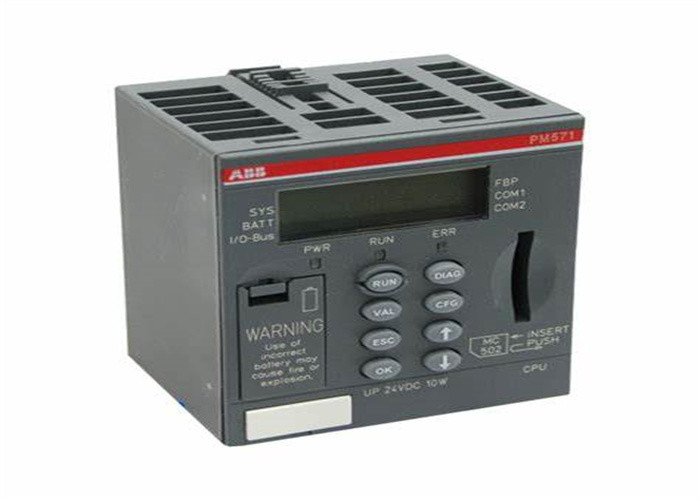
The ABB PU517 Controller Automation System is an advanced automation system designed specifically for industrial control applications. It integrates multiple advanced technologies to efficiently achieve precise control and monitoring of industrial production processes, helping enterprises improve production efficiency, ensure product quality, and reduce operating costs. It occupies an important position in the field of modern industrial automation.
Specification parameters
Processor performance: Adopting high-performance processors with fast data processing capabilities, capable of computing and analyzing large amounts of industrial data in a short period of time, ensuring rapid system response and meeting real-time industrial control requirements.
Memory capacity: Equipped with sufficient memory, it can store a large amount of program code, running data, and historical records, ensuring stable operation of the system under complex working conditions, and facilitating users to trace and analyze production data.
Input/output interface: It has a rich variety of input/output interface types, including digital input/output, analog input/output, etc. It can seamlessly connect with various industrial sensors and actuators to achieve the acquisition of different signals and the output of control instructions.
Communication interface: Supports multiple industrial communication protocols, such as PROFIBUS-DP, to facilitate data exchange and integration with other industrial equipment and control systems, and to build large-scale automated production networks.
Core functions
Precise control: By using advanced control algorithms, various parameters in the industrial production process can be accurately adjusted, such as motor speed, temperature, pressure, etc., to ensure stable production process and product quality meets high standards.
Real time monitoring: Continuously monitor the operating status of industrial equipment in real time, collect various data of equipment such as current, voltage, vibration, etc., timely discover potential faults and hidden dangers through data analysis, and take measures in advance to avoid equipment shutdown.
Data processing and analysis: Quickly process and deeply analyze the massive industrial data collected, generate intuitive reports and trend charts, provide data support for enterprise decision-making, help optimize production processes, and improve production efficiency.
Remote control and management: With the help of network communication functions, users can operate and manage the system through remote terminals, achieve remote device start stop, parameter adjustment and other functions, greatly improving the convenience of production management.
Working principle
The system collects various signals from industrial field sensors through input interfaces, such as temperature signals from temperature sensors and pressure signals from pressure sensors. After analog-to-digital conversion, these signals enter the processor, which analyzes and processes the signals according to preset control programs and algorithms. Then, it sends control instructions to the actuator through the output interface, such as controlling the operating speed of the motor, the opening of the valve, etc., in order to achieve closed-loop control of the industrial production process. At the same time, the system stores the collected data in memory and transmits it to other devices or upper computers for further analysis and management through communication interfaces.
Key advantages
High stability: After rigorous testing and verification, the system has excellent stability and can operate continuously and stably in harsh industrial environments, reducing production interruptions caused by system failures and ensuring the continuity of enterprise production.
Strong flexibility: With rich interfaces and customizable control programs, it can easily adapt to the needs of different industrial scenarios and production processes. Enterprises can flexibly configure and expand the system according to their actual situation.
Efficient and energy-saving: Advanced control algorithms and optimized system design can effectively improve energy utilization efficiency, reduce energy consumption of industrial equipment, save operating costs for enterprises, and conform to the concept of sustainable development.
Easy to integrate: With support for multiple communication protocols, it can quickly integrate with existing automation equipment and systems of enterprises, build a unified automation production platform, avoid duplicate investment, and improve the level of enterprise automation.
precautions
Installation environment: It should be installed in a dry, well ventilated, and suitable temperature environment, avoiding direct sunlight, humidity, and strong electromagnetic interference to ensure the normal operation of the system and extend the service life of the equipment.
Parameter setting: Before use, professional technicians need to accurately set system parameters based on actual industrial production needs. Incorrect parameter settings may cause the system to malfunction and even damage the device.
Daily maintenance: Regularly maintain the system, including cleaning equipment, checking for loose interface connections, backing up data, etc., to promptly identify and solve potential problems, ensuring long-term stable operation of the system.
Application scenarios
Manufacturing industry: In industries such as automobile manufacturing and electronics manufacturing, it is used for automated control of production line equipment, such as controlling the movement of robotic arms, adjusting the speed of production lines, etc., to improve production efficiency and product accuracy.
Energy industry: In fields such as power generation and petrochemicals, real-time monitoring and control of power generation equipment, refining facilities, etc. can be achieved to ensure the safe and stable operation of energy production processes and optimize energy production efficiency.
Transportation: In intelligent transportation systems, it is used for traffic signal control, automated management of logistics and transportation equipment, etc., to enhance the intelligence level and operational efficiency of transportation.
Water treatment: Applied to water plants, sewage treatment plants, etc., it automates the control of equipment such as pumps and valves to achieve rational allocation of water resources and efficient operation of sewage treatment.
- OMRON
- ABB
- General Electric
- EMERSON
- Honeywell
- HIMA
- ALSTOM
- Rolls-Royce
- MOTOROLA
- Rockwell
- Siemens
- Woodward
- YOKOGAWA
- FOXBORO
- KOLLMORGEN
- MOOG
- KB
- YAMAHA
- BENDER
- TEKTRONIX
- Westinghouse
- AMAT
- AB
- XYCOM
- Yaskawa
- B&R
- Schneider
- KONGSBERG
- NI
- WATLOW
- ProSoft
- SEW
- ADVANCED
- Reliance
- TRICONEX
- METSO
- MAN
- Advantest
- STUDER
- DANAHER MOTION
- Bently
- Galil
- EATON
- MOLEX
- DEIF
- B&W
- ZYGO
- Aerotech
- DANFOSS
- Beijer
- Moxa
- Rexroth
- Johnson
- WAGO
- TOSHIBA
- BMCM
- SMC
- HITACHI
- HIRSCHMANN
- Application field
- XP POWER
- CTI
- TRICON
- STOBER
- Thinklogical
- Horner Automation
- Meggitt
- Fanuc
- Baldor
- SHINKAWA
- Other Brands
- UniOP
- KUKA
- Iba
- Beckhoff
- ADLINK
-
 MICRO INNOVATION GF1-10TVB-100 Touch Panel
 -
 MICRO INNOVATION AG WINBLOC CAN-4AI/UI Analog Input Module
 -
 MICRO INNOVATION AG WINBLOC CAN-32DO/0.5A-P-2x16 Output Module
 -
 MICRO INNOVATION AG CAN-32DI/P-2X16 8551224182 Input Module
 -
 MICRO INNOVATION MK2-230/232-57 Circuit Board 85 28 200000
 -
 MICRO INNOVATION CAN-BRIDGE 8551224177 CAN Bridge
 -
 Micro Innovation MC2-430-10TVB-1-10 Panel 24VDC
 -
 MICRO INNOVATION MC2-432-57CQB-1-10 HMI Panel
 -
MICRO INNOVATION AG CAN-BRIDGE 85 51 224177 CAN Bridge
-
 MICRO INNOVATION CAN-4AI/UI Analog Input Module
 -
MICRO INNOVATION CAN-32DI/P-2X16 Input Module
-
 SIGMATEK MDD111 09-404-111 Drive Module
 -
 SIGMATEK DVI021 Display Interface Module
 -
 SIGMATEK 00-450-024 C-IPC Processor
 -
 SIGMATEK MDD-111 MDD111 Drive Module
 -
 SIGMATEK ICA011 20-102-011 Interface Module
 -
 SIGMATEK 01-250-010-D NC4Kompakt Control Module
 -
 SIGMATEK CRIF081 12-751-081 Interface Module
 -
 SIGMATEK S1026-8AF61-R4E-Z57 Drive Module
 -
 SIGMATEK 9305.081.02 9227.082.00 Control Module
 -
 Sigma Tek 5000B-36 Attitude Indicator
 -
 SIGMATEK CEZ201 12-051-201-O Counter Module
 -
 SIGMATEK DPS001 Power Supply Module
 -
 SIGMATEK 994 395 01z Via Interface Module
 -
 SIGMATEK PC411-K 01-310-411-K Industrial PC
 -
 SIGMATEK 9816.324.00 Demag NC4 Keyboard
 -
 SIGMATEK ET261 90010C-71 Operator Terminal
 -
 SIGMATEK DDI 164 05-006-164 Input Module
 -
 SIGMATEK CCP 082 C-DIAS Processor Module
 -
SIGMATEK CEZ201 12-051-201-O PLC Module
-
SIGMATEK MDD 1111 06178867 Drive Module
-
SIGMATEK S1 073-6AC61-RE-Y08-Z Drive Module
-
SIGMATEK MDD 111 Drive Module MDD111
-
 SIGMATEK CSDI161 Safety Module 12-891-161
 -
SIGMATEK C-IPC Processor 01-450-024
-
 SIGMATEK DIAS DAM122 Analog Mixing Module
 -
Sigma Tek 5000B-36 Attitude Gyro Indicator
-
 SIGMATEK TMS012 Motherboard Module 05-250-012-T
 -
 SIGMATEK CCP-531 PLC Module
 -
SIGMATEK DIAS DNC4 I/O Module 05-250-011
-
 SIGMATEK AI088 Analog Input Module
 -
 SIGMATEK CEZ201 Counter Module
 -
SIGMATEK CIC011 Industrial Computer Module
-
 SIGMATEK MDM021 Motor Drive Module
 -
 SIGMATEK DTO163 Digital Output Module
 -
SIGMA-TEK 5000B-36 Attitude Gyro
-
SIGMATEK DM161 Digital Input Module
-
SIGMATEK CCP-531 PLC Control Panel
-
 SIGMATEK HZS773 Touch Terminal Operator Panel
 -
SIGMATEK MDP101 3 KVA 45-65Hz Driver
-
 SIGMATEK ETV1251 Touch Panel 12-230-1251
 -
SIGMATEK CIO021 Safety Module 12-013-021
-
Sigma Tek 4000H-5 Directional Gyro
-
 SIGMATEK TAE531 I/O Module 01-240-531
 -
 SIGMATEK DAI081 Input Module 05-009-081
 -
 SIGMATEK DCP640 Drive Control Module
 -
 SIGMATEK DCP643 Slides Module A6-29
 -
SIGMATEK SCP011 Safety Module 20-890-011
-
SIGMATEK DDM 164-D Slides Module
-
 SIGMATEK C-IPC Processor 146267
 -
SIGMATEK ET3200 Display Screen
-
SIGMATEK CEZ221 C-DIAS Mixing Module
-
 SIGMATEK SDD120-2 DIAS Servo Drive
 -
SIGMATEK DIP011 05-058-011 Module
-
 Sigmatek DEC181 I/O Module
 -
SIGMATEK DCP640 DIAS Central Unit
-
SIGMATEK 00-450-024 C-IPC Industrial Computer
-
SIGMATEK AKM32C-ANCNR-B0 Servomotor
-
SIGMATEK DVI021 DIAS Power Module
-
SIGMATEK CTS051 12-053-051 Control Module
-
 SIGMATEK CTS022 Control Module
 -
 Sigmatek 01-250-010-D NC4Kompakt V2.1 Module
 -
 SIGMATEK Control Keyboard 01-285-042 Interface
 -
 SIGMATEK TO081 20-007-081 Digital Output Module
 -
 Sigmatek AKM73Q-ANCNGBB0 7.07kW Servo Motor
 -
Sigmatek DIP012 Demag 07024165 Processor Module
-
 SIGMATEK PC 411 Injection Molding Controller
 -
SIGMATEK CEZ201 12-051-201-O Processor Module
-
 SIGMATEK VI021 20-003-021 Digital Input Module
 -
SIGMATEK Computer C-IPC 144904 Industrial PC
-
 SIGMATEK 9307.083.01 9305.081.02 Industrial Module
 -
 SIGMATEK AI075 Analog Input Module
 -
 SIGMATEK HGT834-W Teaching Pendant
 -
Sigmatek CDI161 Digital Input Module
-
 SIGMATEK HGT834 Teaching Pendant
 -
 SIGMATEK CEZ201 12-051-201-O Module
 -
SIGMATEK Demag 9617.067.03 9708.244.00 Module
-
 SIGMATEK SCP010 Safety CPU Module
 -
SIGMATEK N100 20-011-100 Module
-
 SIGMATEK CNC 031 Positioning Output Module
 -
 Sigmatek 01-355-016 Control Module
 -
 Sigmatek MDM021 Digital Mixed Module
 -
Sigmatek DAI411 05-020-411 Analog Module
-
Attitude Gyro 1U367-232-2 Aircraft Instrument
-
 Sigma-Tek 5000B-36 Attitude Gyro 23-501-06-16
 -
Sigmatek HGT834-W Injection Molding Teach Pendant
-
Sigma Tek 5000EG Attitude Gyro 1U670-003-12
-
Sigmatek HGT834-W Teach Pendant
-
Sigmatek DEE011 05-068-011 Module
-
Sigmatek DIAS DCP643 Central Processing Unit
-
Sigmatek MDD111-1 DIAS Drive Axis Module
-
 Sigmatek DKL042 05-024-042 Terminal Module
 -
Sigmatek DM822 Control Module
-
Sigmatek CDM167 12-008-167-O Module
-
Sigmatek TAE151 Touch Display Unit
-
 Sigmatek DCC041 SLIDES Module 05-700-041-D
 -
Sigmatek AKM65M-ANC2GBB0 PM Servo Motor
-
Sigmatek ETT221 01-230-221 Operator Terminal
-
Sigmatek SLIDES DAM 124 Analog Module
-
Sigmatek AKM31C-ANCNGBB0 Servo Motor
-
Mannesmann Demag Sigmatek CP626 Central Unit
-
SIGMATEK 0332.554.03 Board 371071000154
-
 SIGMATEK 12-250-021 Base Plate Back Panel CM5V020
 -
SIGMATEK DM162 S-DIAS Digital Mix Module
-
DEMAG ERGOTECH 061 381 66 Sigmatek 9842.243.02 Circuit Board
-
 SIGMATEK CP313-1 PLC Module
 -
Sigmatek ETV0551-2 VARAN Touch Terminal
-
 Sigmatek SDM 081 FS S-Dias Safety Module
 -
 DEMAG 05-250-023 Ergotech Motherboard with Sigmatek TMS012
 -
Sigmatek CM5V020 12-250-023-K Wiring Base
-
Sigma Tek 5000B-37 Attitude Gyro Indicator
-
Sigmatek SDD120-2 DIAS Drive
-
 Sigmatek CME221 Memory Module
 -
Sigmatek DCP640 DIAS Central Unit
-
 Sigmatek STO040 Safety Output Module
 -
Sigmatek CET281 Control Panel
-
Sigmatek CIPC LX800 Demag NC5 CPU
-
Sigmatek DKL093 05-024-093 Terminal Module


