
YOKOGAWA CENTUM VP System HMI (HIS)
Split screen mode: Three tiled modes (pen split/simulation discrete split/trend data reference mode split)
Data export: Supports graphic copying (excluding window borders), numerical data copying (including labels, time, values, status, etc.), and can be pasted into tools such as Excel
Flexible configuration: Supports displaying data with different sampling periods on the same screen, and can adjust the magnification ratio of the timeline and data axis
4. Tune View
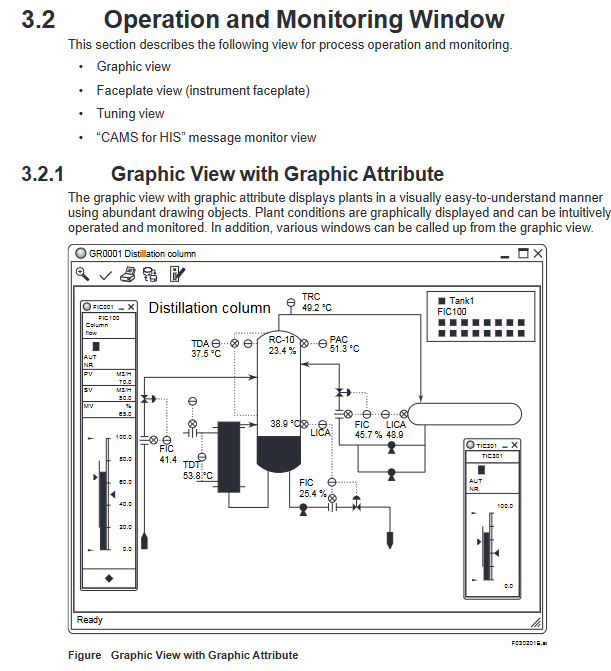
Core function: Display the tuning parameters and trends of a single instrument, support parameter adjustment
Display content:
Basic parameters: PV (process variable), SV (set value), MV (operating variable), operating mode, alarm status
Tuning parameters: proportional (P), integral (I), derivative (D) parameters, limit settings (HH/PH/ML/LL, etc.)
Trend curve: Real time display of PV, SV, MV trends over time, supporting axis scaling
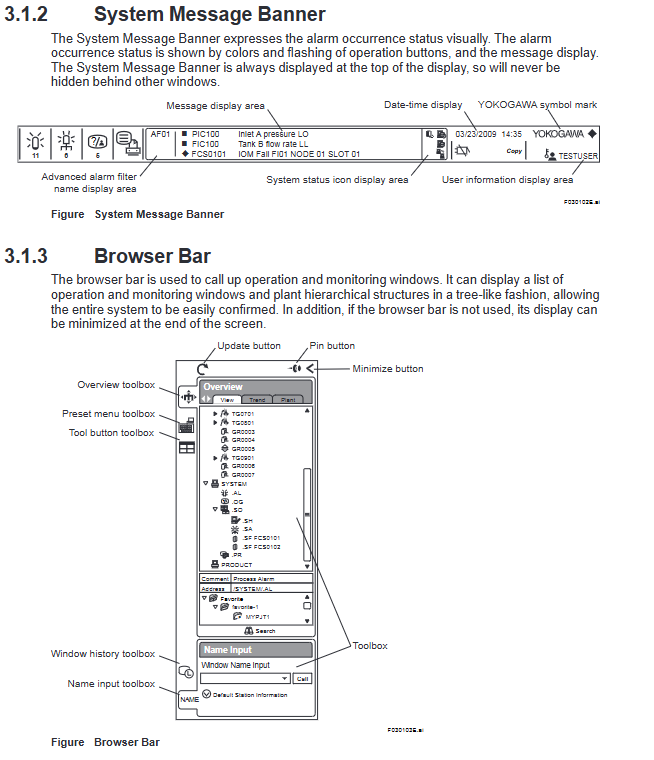
CAMS for HIS message monitoring (core alarm management tool)
Following the EEMUA 191 alarm management standard, solving the problem of alarm overflow, the core functions include:
Multi system alarm integration: Centralized display of alarms and events for CENTUM VP, ProSafe RS, STARDOM, and PRM
Intelligent filtering function:
Filtering/Sorting: Basic filtering (process/system alarms), user-defined filtering, temporary filtering
Eclipsing: Integrating duplicate alarms of the same label into a single line display
Shelving: Manually/automatically move non essential alarms to temporary areas
Load Shedding: Automatically activates preset filters when a large number of sudden alarms occur
Suppression: Suppress redundant messages by alarm group/site
Alarm value-added information: configurable monitoring purposes (safety/environmental/economic), target user groups, response time, priority, root cause analysis, processing flow, etc
Alarm setting value management:
Save the set values of the engineering phase as the baseline values, and support comparing the baseline values with the current values
Display differences in set values, support benchmark values to override current values or vice versa
Archive difference setting values for easy traceability and adjustment of records
Long term data archiving: supports long-term storage of alarm history data, which can be traced through a history viewer
(3) Auxiliary support function
1. Report function
Core purpose: Automatically generate daily/monthly reports, support production data analysis and compliance records
Tool dependency: Based on Microsoft Excel, supporting template reuse and custom creation
Imported data types: settlement data (mean/total/maximum/minimum), trend data, historical messages, tag information, real-time process data, batch data
Printing method:
Automatic printing: timed triggering, sequence message triggering
Manual printing: triggered by function keys, graphic view buttons, Excel direct printing, VB program call
Remote printing: Other PCs within the network can print reports through Excel
2. Remote operation and monitoring server
Deployment Architecture: Remote PC (Client) → Intranet → Remote Operations Server → CENTUM VP Control Network
Core function: Remote implementation of operation monitoring and engineering configuration, using operation windows consistent with local HIS
Reliability requirement: The control network needs to be equipped with at least one standard HIS to ensure real-time performance and redundant backup
3. CENTUM Desktop
Dedicated operating environment: Hide Windows redundant features (such as desktop icons, unrelated start menu items, shutdown options)
Core value: Focus on production operations, avoid misoperation of Windows system functions, and enhance operational security
4. HIS Utility tool
Purpose: Configure HIS operating environment, support multi tab settings
Core configuration items:
User management: Add/delete users, configure automatic login (only in CENTUM authentication mode)
Operation configuration: keyboard type, mouse increase/decrease mode, trend collection pen allocation
Security Policy: Set HIS Security Rules
Special configuration: CAMS for HIS parameters, remote operation and maintenance parameters, OPC interface parameters
System management and security control
(1) System management window
Window Name Core Usage Key Features
Overview of System Status: Monitor the status of all stations and communication equipment within the monitoring domain. 1. Use icons to visually display the operational status of FCS, HIS, BCV, and other equipment
2. Support calling the system maintenance window
3. Domain definition: All sites connected by the control bus (Vnet/VNet/IP)
System alarm view displays hardware/communication error alarms. 1. The alarms are arranged in reverse chronological order (latest first)
2. When the alarm is triggered, it is accompanied by buzzing and flashing prompts
3. Automatically switch to CAMS message monitoring when CAMS takes effect
FCS status display view shows FCS hardware configuration and operational status. 1. Display site information, hardware architecture, and communication bus status
2. Color identification of normal/abnormal status of equipment
3. Support starting/closing the control station
- OMRON
- ABB
- General Electric
- EMERSON
- Honeywell
- HIMA
- ALSTOM
- Rolls-Royce
- MOTOROLA
- Rockwell
- Siemens
- Woodward
- YOKOGAWA
- FOXBORO
- KOLLMORGEN
- MOOG
- KB
- YAMAHA
- BENDER
- TEKTRONIX
- Westinghouse
- AMAT
- AB
- XYCOM
- Yaskawa
- B&R
- Schneider
- KONGSBERG
- NI
- WATLOW
- ProSoft
- SEW
- ADVANCED
- Reliance
- TRICONEX
- METSO
- MAN
- Advantest
- STUDER
- DANAHER MOTION
- Bently
- Galil
- EATON
- MOLEX
- DEIF
- B&W
- ZYGO
- Aerotech
- DANFOSS
- Beijer
- Moxa
- Rexroth
- Johnson
- WAGO
- TOSHIBA
- BMCM
- SMC
- HITACHI
- HIRSCHMANN
- Application field
- XP POWER
- CTI
- TRICON
- STOBER
- Thinklogical
- Horner Automation
- Meggitt
- Fanuc
- Baldor
- SHINKAWA
- Other Brands
- UniOP
- KUKA
- Iba
- Beckhoff
- ADLINK
-
 Sigmatek MDD111-1 DIAS Drive Axis Module
 -
 Sigmatek DKL042 05-024-042 Terminal Module
 -
 Sigmatek DM822 Control Module
 -
 Sigmatek CDM167 12-008-167-O Module
 -
 Sigmatek TAE151 Touch Display Unit
 -
 Sigmatek DCC041 SLIDES Module 05-700-041-D
 -
 Sigmatek AKM65M-ANC2GBB0 PM Servo Motor
 -
 Sigmatek ETT221 01-230-221 Operator Terminal
 -
 Sigmatek SLIDES DAM 124 Analog Module
 -
Sigmatek AKM31C-ANCNGBB0 Servo Motor
-
 Mannesmann Demag Sigmatek CP626 Central Unit
 -
 SIGMATEK 0332.554.03 Board 371071000154
 -
 SIGMATEK 12-250-021 Base Plate Back Panel CM5V020
 -
 SIGMATEK DM162 S-DIAS Digital Mix Module
 -
 DEMAG ERGOTECH 061 381 66 Sigmatek 9842.243.02 Circuit Board
 -
 SIGMATEK CP313-1 PLC Module
 -
Sigmatek ETV0551-2 VARAN Touch Terminal
-
 Sigmatek SDM 081 FS S-Dias Safety Module
 -
 DEMAG 05-250-023 Ergotech Motherboard with Sigmatek TMS012
 -
Sigmatek CM5V020 12-250-023-K Wiring Base
-
 Sigma Tek 5000B-37 Attitude Gyro Indicator
 -
 Sigmatek SDD120-2 DIAS Drive
 -
 Sigmatek CME221 Memory Module
 -
 Sigmatek DCP640 DIAS Central Unit
 -
 Sigmatek STO040 Safety Output Module
 -
Sigmatek CET281 Control Panel
-
 Sigmatek CIPC LX800 Demag NC5 CPU
 -
 Sigmatek DKL093 05-024-093 Terminal Module
 -
 Sigmatek AI088 20-009-088 Analog Input Module
 -
Sigmatek CAI888 Analog Input Module
-
SIGMATEK CCA021 12-025-021 Analog Output Module
-
SIGMATEK 1104.579.05 Control Module
-
SIGMATEK SDI100 Digital Input Module
-
 SIGMATEK C-IPC 256MB LX800 Compact Dias
 -
 SIGMATEK 9423.090.02 Control Module
 -
SIGMATEK C-IPC 256 Power Supply 148498
-
 SIGMATEK CAI025 Analog Input Module
 -
 SIGMATEK CTO166 Digital Output Module
 -
 SIGMATEK CP112 20-004-112 Processor Module
 -
SIGMATEK CAI887 12-009-887 Safety Module
-
 Sigma-Tek 4000B-31 Directional Gyro 1U262-002-42
 -
Sigmatek C-IPC 256MB LX800 IPC Controller
-
Sigmatek C-IPC 01-450-031 Industrial PC LX800
-
Sigmatek C-IPC 256 Industrial PC Controller
-
Sigmatek CCP-531 PLC Processor Module
-
Sigmatek CDI163 Digital Input Module
-
 Sigmatek ETV0501 VARAN Terminal 12-230-0501
 -
 Sigmatek CTMS020 C-DIAS Technology Module
 -
 Sigmatek CIV512 VARAN Switch Module
 -
 Sigmatek HU011 20-080-011 Interface Module
 -
SIGMATEK SLIDES DAM 124 Module
-
 SIGMATEK C-IPC 161 01-450-161L Industrial PC
 -
SIGMATEK C-IPC 128MB VIA 733MHz 01-450-024-K
-
 SIGMATEK 12-780-012 R8-IPC Geode LX800 Module
 -
SIGMATEK CAM124 Analog Module
-
 SIGMATEK S1 032-8AF61-R4 EZ Servo Motor
 -
 SIGMATEK CTO163 Digital Output Module
 -
 SIGMATEK CCP082 12-004-082 Processor Module
 -
 SIGMATEK CRCH081 C-DIAS Temperature Module
 -
 SIGMATEK PC322-K 01-310-322-K Industrial PC
 -
SIGMATEK SDD310-2 Servo Drive
-
 SIGMATEK AI084 Analog Input Module
 -
SIGMATEK CRCH081 12-752-081 Temperature Module
-
Sigma-Tek 5000L-4 Attitude Gyro 1U284-001-3
-
 SIGMATEK CM5V020 12-250-023-K Wiring Module
 -
Sigma-Tek 4000H-6 Directional Gyro IU262-035-7
-
 SIGMATEK Dias DCP160 05-004-160 Processor Module
 -
SIGMATEK 0147.395.02 Control Module
-
SIGMATEK A1084 Control Module
-
SIGMATEK DI200 20-006-2000 Digital Input Module
-
Sigmatek DNC115 Encoder Module
-
 Sigmatek DAM122 05-017-122 Analog Module
 -
Sigmatek 9802.289.01 Control Board TA71 Display
-
Sigmatek TO127 20-007-127 Digital Output Module
-
Sigmatek DNC031 05-011-031 Digital Module
-
Sigmatek VI022 20-003-022 Interface Module
-
Sigmatek CAI085 Analog Input Module
-
 Sigmatek CP111 S-DIAS CPU Module
 -
Sigmatek CTMS030 Krauss Maffei Module
-
 Sigmatek CAM123 Control Module
 -
 Sigmatek TAE732-P 01-240-732-P Touch Display Unit
 -
Sigmatek MDM021 Digital Mixed Module
-
Sigmatek DCP642 DIAS Central Unit
-
 Sigmatek CST022 12-014-022 C-DIAS Module
 -
 Sigmatek SRO021 20-893-021 Safety Relay Output
 -
 Krauss Maffei MC5 Control System Sigmatek
 -
 Sigmatek DC061 Module 18-24VDC 300mA
 -
 Herrmann EVT0855 Ultrasonic Welder Touch Panel
 -
Sigmatek CIV521 Control Module 1.4A 2W
-
Sigmatek DDI61 05-006-161 Digital Input Module
-
SIGMATEK ETT312-E Touch Terminal 01-230-312
-
Cessna S3326-1 Sigma Tek 5000B-67 Gyro 1U149-015-9
-
SIGMATEK PS101 Power Supply Module
-
SIGMATEK 0332.554.03 Control Module 371071000154
-
 SIGMATEK ETT312-E Touch Terminal 01-230-312
 -
SIGMATEK CDM163 Control Module
-
 SIGMATEK VSV046 16-023-046 Module
 -
SIGMATEK AM221 20-017-221 Analog Module
-
SIGMATEK CTS051 12-053-051 Control Module
-
SIGMATEK AM221 20-017-221 Analog Module
-
Sigmatek CSDI161 12-891-161 Safety Input Module
-
Sigma Tek 4000C-1 Directional Gyro Indicator
-
Sigmatek ETV0501 12-230-0501 VARAN Terminal
-
Sigmatek DDM165 SLIDES Module
-
Sigmatek N100 20-011-100 Control Module
-
Sigmatek AKM54K-ANC2R-B0 PM Servo Motor
-
Sigmatek CTO166 Digital Output Module
-
Sigmatek CP212-K 20-004-212-K CPU Module
-
Sigmatek CDI161 Digital Input Module
-
Sigmatek DCC080 05-700-080-2 Control Module
-
 SIGMATEK SCP011 S-DIAS Safety CPU
 -
SIGMATEK SCP011 S-DIAS Safety CPU
-
SIGMATEK SRO022 Relay Output Module
-
SIGMATEK MDD 121 Drive Axis Module
-
SIGMATEK DSI021 SLIDES Siemens Interface
-
SIGMATEK DIAS DCP161 Module 05-004-161
-
 Sigmatek ETT312 Built-in Touch Terminal
 -
SIGMATEK DCP 643 DIAS Controller System
-
SIGMATEK CIO021 Multi I/O Module
-
SIGMATEK CTMS020 Control Module
-
 Sigmatek CME 221 Memory Module
 -
Sigmatek 0420.615.01 Control Board
-
Sigmatek CP111 20-004-111 CPU Module
-
Sigmatek 9405.065.03 Control Board
-
Sigmatek ETEK 01-450-032-K C-IPC 256MB Industrial PC
-
Sigmatek CTO163 12-007-163 Safety Output Module
-
Sigmatek TO081 20-007-081 Digital Output Module
-
 Sigmatek SI021 20-022-021 Safety Input Module


