
WOODWARD DSLC-2 Digital Synchronizer and Load Control
WOODWARD DSLC-2 Digital Synchronizer and Load Control
Introduction
The Woodward DSLC-2 digital synchronizer and load control is an advanced microcomputer control device designed specifically for three-phase AC generators, integrating multiple functions such as synchronization control, load sensing, load distribution, dead bus closure, reactive power/power factor control, and process control. This article is based on Woodward's official 37443J technical manual (software version 1.15xx), providing a comprehensive analysis of the core functions, technical features, installation configuration, and operational applications of the device. The aim is to provide engineers, technicians, and operations personnel with a detailed reference guide.
1、 Product Overview and Core Features
1.1 Product positioning
DSLC-2 is a direct upgrade product of Woodward's classic DSLC series, suitable for various grid connected or islanded operating generator sets. Its design supports parallel operation and control of up to 32 generator sets, achieving seamless communication between DSLC-2 and MSLC-2 (main station load control unit) through a dedicated Ethernet system.
1.2 Main functional modules
Synchronizer function:
Supports two modes: phase matching or slip frequency synchronization.
Capable of automatic dead bus closure, conducting locking negotiation through communication network to prevent multiple devices from closing simultaneously.
Integrated voltage matching, automatic reclosing, automatic resynchronization, and synchronization timeout alarm functions.
Load control function:
Support droop control, base load control, and equal power load distribution mode.
Provide adjustable ramp loading/unloading to achieve disturbance free switching.
Integrated reverse power protection, load switch, and frequency fine-tuning functions.
Process control function:
Cascade PID process controller, suitable for applications such as cogeneration, inlet/outlet control, pressure or liquid level control, etc.
Supports analog input (process signal) and internal digital reference, and can be remotely set.
Reactive power/power factor control function:
Control the reactive power or power factor of the generator in the grid connected system.
Support reactive power sharing (during islanding operation) and voltage fine-tuning function.
Provide voltage range alarm and high/low limit protection.
Communication and network functions:
Equipped with dual Ethernet ports (network A and B), supporting redundant communication.
Network A is dedicated to DSLC-2/MSLC-2 internal communication (UDP protocol).
Network B supports Modbus TCP/IP for communication with the upper computer (PLC/DCS).
Additionally, RS-485 interface is provided to support Modbus RTU protocol.
2、 System architecture and installation points
2.1 Hardware Installation
Dimensions: 227 mm × 250 mm × 84 mm, using panel installation method.
Environmental requirements: The working temperature range is -40 ° C to+70 ° C, and direct exposure to water sources, condensation environments, and strong electromagnetic interference should be avoided.
Power requirement: 12/24 VDC (range 8-40 VDC), it is recommended to use slow melting fuses (6A) or miniature circuit breakers for protection.
Grounding protection: It is necessary to connect a protective earth wire (PE) with a wire diameter of not less than 2.5 mm ².
2.2 Wiring specifications
Voltage measurement:
Generator voltage measurement supports 3-phase 4-wire (with neutral point), 3-phase 3-wire, and 3-phase 4-wire open delta connections.
Bus voltage measurement supports 1-phase 2-wire (phase to phase or phase to neutral point) and 3-phase measurement of auxiliary bus.
Attention: 120V and 480V input terminals cannot be used simultaneously, and the correct terminals should be configured according to the rated voltage of the PT secondary side.
Current measurement:
Support three-phase or single-phase current transformer input, ensuring that one end of the CT secondary side is grounded.
When wiring, attention should be paid to the power measurement direction and display symbol (positive for power generation, negative for reverse power).
Discrete input:
Supports positive or negative polarity signals, but all inputs must be of the same polarity.
The input functions include: operation, circuit breaker assistance, voltage rise/fall, load rise/fall, base load, unloading, process control, ramp pause, and section number selection.
Relay output:
There are a total of 12 relay outputs, including alarm, load switch, high and low limit, circuit breaker opening and closing, and voltage rise/fall.
The output contact capacity is 250VAC/DC, 2A.
Analog input/output:
Provide 3 analog inputs (remote load reference, process signal, reactive load).
2-channel analog output (speed bias, voltage bias), supporting multiple signal types such as 0-20mA, 4-20mA, 0-10V, etc., can be configured as voltage or PWM output through jumper wires.
2.3 Communication Interface
RS-232: Used to connect Woodward ToolKit configuration software.
RS-485: Supports Modbus RTU half duplex or full duplex communication.
Ethernet (RJ-45): Network A (UDP+Modbus TCP), Network B (Modbus TCP, optional redundant UDP).
The communication protocol supports Woodward Private Protocol (ServLink) and standard Modbus.
3、 Detailed explanation of software configuration and parameters
3.1 Configuration Tool - Woodward ToolKit
Version requirement: V6.4.1 or higher version is required.
Connection method: It can be connected through RS-232 serial port or Ethernet (recommended network A).
Function: Provides visual monitoring, parameter configuration, trend recording, diagnosis, and firmware management functions.
3.2 Analysis of Key Parameter Menu
3.2.1 Synchronizer Configuration (Menu 1)
Synchronization mode: optional shutdown, synchronization, allow, check, run, automatic shutdown, etc.
Phase matching/slip frequency: Users can choose according to their application requirements.
Dead bus closure: After activation, the device automatically detects the dead bus and negotiates closure permissions.
Phase angle compensation: configurable ± 180 ° compensation value, used to correct phase deviation caused by transformer wiring.
3.2.2 Load Control (Menu 2)
Frequency control mode: PID analog control, three position controller or off.
Load control modes: droop, base load, load distribution, process control, etc.
Slope rate: The loading, unloading, and lifting/lowering reference rates can be independently configured.
Load allocation gain: Adjust the response speed and stability of load allocation.
3.2.3 Process Control (Menu 3)
PID parameters: Proportional, integral, and derivative gains are adjustable.
Process reference source: internal settings or remote analog input.
High and low limit alarm: It can set the high and low limit values of the process signal and enable the alarm.
3.2.4 Reactive Power/Power Factor Control (Menu 4)
Control mode: reactive power control, power factor control, or shutdown.
Voltage control mode: PID analog control or three position controller.
Reactive power allocation gain: Adjust the reactive power allocation performance when multiple machines are connected in parallel.
3.2.5 System Configuration (Menu 5)
Equipment number: 1-32, must be unique.
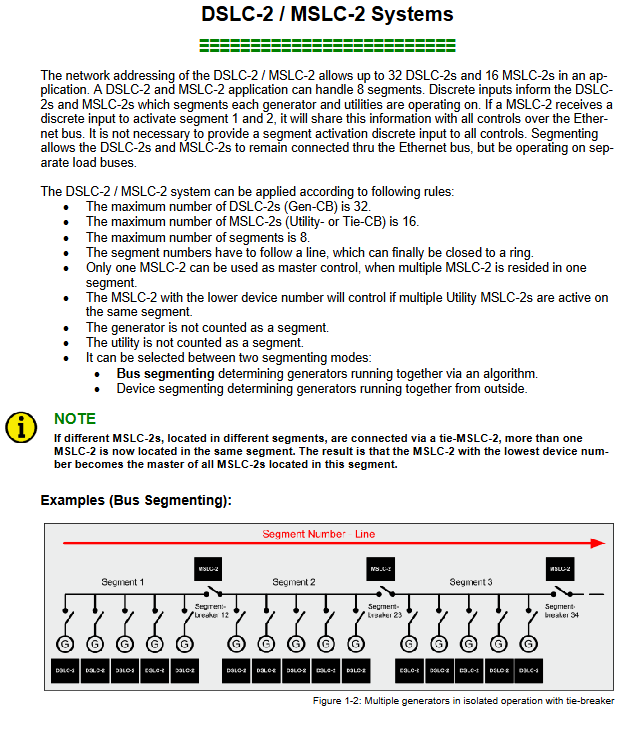
Segment number configuration: Supports 8 bus segments, which can be input through discrete quantities or automatically recognized.
PT/CT parameters: The transformer ratio must be accurately set to ensure measurement accuracy.
Communication mode: Single network or redundant Ethernet mode.
3.2.6 Analog Input/Output (Menu 6)
Input signal type: optional current and voltage signals, supporting linear calibration.
Output signal range: Multiple standard signal ranges or custom ranges can be configured.
Filter constant: Optional filtering level, smooth output signal.
3.2.7 System Management (Menu 5.2)
Password protection: Supports 5 levels of access permissions (user, service, temporary debugging, debugging, super debugging).
Factory settings recovery: default parameters can be restored through password protection.
Indicator light test: One click test of the front panel LED status.
4、 Advanced features and application scenarios
4.1 Parallel connection and segmented control of multiple units
DSLC-2 supports up to 32 units+16 MSLC-2 to form a complex power grid.
Segmented operation: By using discrete inputs (DI13-DI20) to identify the status of bus segments, independent or parallel operation between different segments can be achieved.
Load distribution: During islanding operation, precise allocation of active and reactive power is achieved through Ethernet communication.
4.2 Redundant Communication and System Reliability
Dual network redundancy: Networks A and B can be configured in redundancy mode to improve communication reliability.
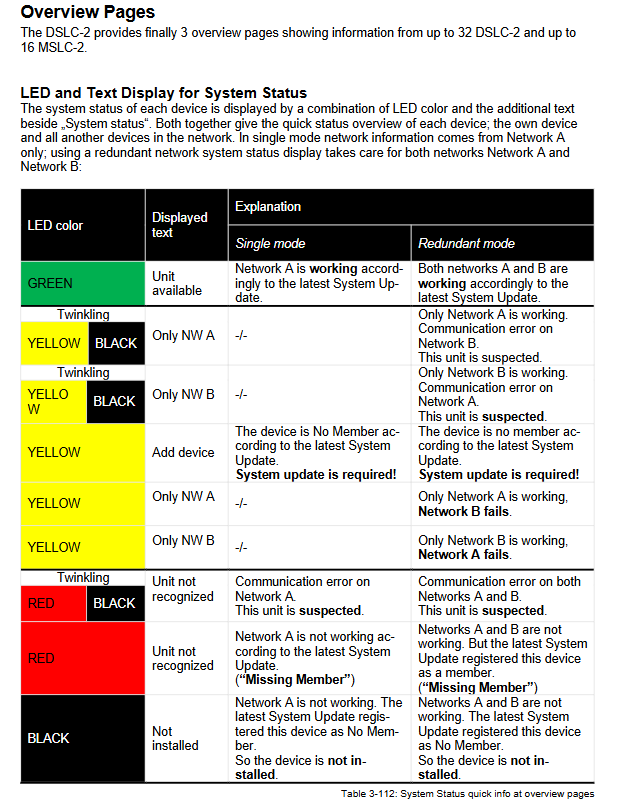
Lost member detection: When communication between devices in the network is interrupted, the system automatically switches to droop mode to avoid losing control.
System update function: Network devices can be re identified and reconfigured through parameter or discrete input triggering.
4.3 Safety and Protection Functions
Electronic electrostatic protection: All electronic components are sensitive to static electricity and must strictly comply with ESD protection regulations.
Alarm and protection: Provide multiple alarms and protections for frequency, voltage, load, process, reverse power, etc.
Security Warning:
The prime mover must be equipped with an overspeed (over temperature/over pressure) shutdown device independent of the control system.
It is prohibited to use or modify the equipment beyond the prescribed scope, otherwise it may result in personal injury, property damage, and warranty failure.
5、 Maintenance and Diagnosis
5.1 Daily Maintenance
Regular inspection: wiring tightness, power supply voltage, communication status.
Software update: Check and update device firmware through ToolKit (requires authorized personnel to operate).
Counter management: It can record the operating hours and active/reactive energy of the generator, and supports manual reset and preset.
5.2 Fault diagnosis
ToolKit diagnostic page: provides real-time status monitoring, alarm recording, communication status, and device overview.
LED indication:
Synchronization Enable LED: Green indicates readiness for synchronization, red indicates voltage frequency window not met.
CPU normal "LED: Green indicates device ready, red indicates fault, flashing indicates system update.
Communication diagnosis: can detect network A/B errors, device mismatches, phase rotation mismatches, etc.
- OMRON
- ABB
- General Electric
- EMERSON
- Honeywell
- HIMA
- ALSTOM
- Rolls-Royce
- MOTOROLA
- Rockwell
- Siemens
- Woodward
- YOKOGAWA
- FOXBORO
- KOLLMORGEN
- MOOG
- KB
- YAMAHA
- BENDER
- TEKTRONIX
- Westinghouse
- AMAT
- AB
- XYCOM
- Yaskawa
- B&R
- Schneider
- KONGSBERG
- NI
- WATLOW
- ProSoft
- SEW
- ADVANCED
- Reliance
- TRICONEX
- METSO
- MAN
- Advantest
- STUDER
- DANAHER MOTION
- Bently
- Galil
- EATON
- MOLEX
- DEIF
- B&W
- ZYGO
- Aerotech
- DANFOSS
- Beijer
- Moxa
- Rexroth
- Johnson
- WAGO
- TOSHIBA
- BMCM
- SMC
- HITACHI
- HIRSCHMANN
- Application field
- XP POWER
- CTI
- TRICON
- STOBER
- Thinklogical
- Horner Automation
- Meggitt
- Fanuc
- Baldor
- SHINKAWA
- Other Brands
- UniOP
- KUKA
- Iba
- Beckhoff
- ADLINK
-
 Micro Innovation CAN-3AI/1AO-UI Profibus Module
 -
 Micro Innovation PDP-TP Profibus DP Module
 -
 Micro Innovation CAN-3AI/1AO-UI Analog Module
 -
 Micro Innovation MC2-430-12TSB-10 HMI Panel
 -
 Micro Innovation XNE-8DO-24VDC-0.5A-P I/O Module
 -
MICRO INNOVATION AG WINBLOC CAN-32DI/P-2x16 85 51 224182
-
 MICRO INNOVATION AG WINBLOC CAN-4AO/UI 85 51 224195
 -
Micro Innovation Xv-252-57cnn-1-10 HMI Panel
-
Micro Innovation XN Basis XN-S4T-SBBS-CJ 225200
-
 Micro Innovation GF1-10TVD-100 Micro Panel
 -
 Micro Innovation XN-B3T-SBC 16-Fold DO Base Module
 -
MICRO INNOVATION AG WINBLOC CAN-3AI/1AO-UI 85 51 224192
-
 KMK Micro Innovation GS2-90EMD-000 Micro Panel
 -
 Micro Innovation MC2-430-10TVB-1-10 PanelView Terminal 24VDC
 -
 Micro Innovation XNE-8DO-24VDC-0.5A-P I/O Module 8550100795
 -
 MICRO INNOVATION GF1-10TVB-100 Touch Panel
 -
MICRO INNOVATION AG WINBLOC CAN-4AI/UI Analog Input Module
-
 MICRO INNOVATION AG WINBLOC CAN-32DO/0.5A-P-2x16 Output Module
 -
 MICRO INNOVATION AG CAN-32DI/P-2X16 8551224182 Input Module
 -
 MICRO INNOVATION MK2-230/232-57 Circuit Board 85 28 200000
 -
 MICRO INNOVATION CAN-BRIDGE 8551224177 CAN Bridge
 -
Micro Innovation MC2-430-10TVB-1-10 Panel 24VDC
-
MICRO INNOVATION MC2-432-57CQB-1-10 HMI Panel
-
MICRO INNOVATION AG CAN-BRIDGE 85 51 224177 CAN Bridge
-
MICRO INNOVATION CAN-4AI/UI Analog Input Module
-
MICRO INNOVATION CAN-32DI/P-2X16 Input Module
-
 SIGMATEK MDD111 09-404-111 Drive Module
 -
 SIGMATEK DVI021 Display Interface Module
 -
 SIGMATEK 00-450-024 C-IPC Processor
 -
 SIGMATEK MDD-111 MDD111 Drive Module
 -
 SIGMATEK ICA011 20-102-011 Interface Module
 -
 SIGMATEK 01-250-010-D NC4Kompakt Control Module
 -
 SIGMATEK CRIF081 12-751-081 Interface Module
 -
 SIGMATEK S1026-8AF61-R4E-Z57 Drive Module
 -
 SIGMATEK 9305.081.02 9227.082.00 Control Module
 -
 Sigma Tek 5000B-36 Attitude Indicator
 -
 SIGMATEK CEZ201 12-051-201-O Counter Module
 -
 SIGMATEK DPS001 Power Supply Module
 -
 SIGMATEK 994 395 01z Via Interface Module
 -
 SIGMATEK PC411-K 01-310-411-K Industrial PC
 -
 SIGMATEK 9816.324.00 Demag NC4 Keyboard
 -
 SIGMATEK ET261 90010C-71 Operator Terminal
 -
 SIGMATEK DDI 164 05-006-164 Input Module
 -
 SIGMATEK CCP 082 C-DIAS Processor Module
 -
SIGMATEK CEZ201 12-051-201-O PLC Module
-
SIGMATEK MDD 1111 06178867 Drive Module
-
SIGMATEK S1 073-6AC61-RE-Y08-Z Drive Module
-
SIGMATEK MDD 111 Drive Module MDD111
-
 SIGMATEK CSDI161 Safety Module 12-891-161
 -
SIGMATEK C-IPC Processor 01-450-024
-
 SIGMATEK DIAS DAM122 Analog Mixing Module
 -
Sigma Tek 5000B-36 Attitude Gyro Indicator
-
 SIGMATEK TMS012 Motherboard Module 05-250-012-T
 -
 SIGMATEK CCP-531 PLC Module
 -
SIGMATEK DIAS DNC4 I/O Module 05-250-011
-
 SIGMATEK AI088 Analog Input Module
 -
 SIGMATEK CEZ201 Counter Module
 -
SIGMATEK CIC011 Industrial Computer Module
-
 SIGMATEK MDM021 Motor Drive Module
 -
 SIGMATEK DTO163 Digital Output Module
 -
SIGMA-TEK 5000B-36 Attitude Gyro
-
SIGMATEK DM161 Digital Input Module
-
SIGMATEK CCP-531 PLC Control Panel
-
 SIGMATEK HZS773 Touch Terminal Operator Panel
 -
SIGMATEK MDP101 3 KVA 45-65Hz Driver
-
 SIGMATEK ETV1251 Touch Panel 12-230-1251
 -
SIGMATEK CIO021 Safety Module 12-013-021
-
Sigma Tek 4000H-5 Directional Gyro
-
 SIGMATEK TAE531 I/O Module 01-240-531
 -
 SIGMATEK DAI081 Input Module 05-009-081
 -
 SIGMATEK DCP640 Drive Control Module
 -
 SIGMATEK DCP643 Slides Module A6-29
 -
SIGMATEK SCP011 Safety Module 20-890-011
-
SIGMATEK DDM 164-D Slides Module
-
 SIGMATEK C-IPC Processor 146267
 -
SIGMATEK ET3200 Display Screen
-
SIGMATEK CEZ221 C-DIAS Mixing Module
-
 SIGMATEK SDD120-2 DIAS Servo Drive
 -
SIGMATEK DIP011 05-058-011 Module
-
 Sigmatek DEC181 I/O Module
 -
SIGMATEK DCP640 DIAS Central Unit
-
SIGMATEK 00-450-024 C-IPC Industrial Computer
-
SIGMATEK AKM32C-ANCNR-B0 Servomotor
-
SIGMATEK DVI021 DIAS Power Module
-
SIGMATEK CTS051 12-053-051 Control Module
-
 SIGMATEK CTS022 Control Module
 -
 Sigmatek 01-250-010-D NC4Kompakt V2.1 Module
 -
 SIGMATEK Control Keyboard 01-285-042 Interface
 -
 SIGMATEK TO081 20-007-081 Digital Output Module
 -
 Sigmatek AKM73Q-ANCNGBB0 7.07kW Servo Motor
 -
Sigmatek DIP012 Demag 07024165 Processor Module
-
 SIGMATEK PC 411 Injection Molding Controller
 -
SIGMATEK CEZ201 12-051-201-O Processor Module
-
 SIGMATEK VI021 20-003-021 Digital Input Module
 -
SIGMATEK Computer C-IPC 144904 Industrial PC
-
 SIGMATEK 9307.083.01 9305.081.02 Industrial Module
 -
 SIGMATEK AI075 Analog Input Module
 -
 SIGMATEK HGT834-W Teaching Pendant
 -
Sigmatek CDI161 Digital Input Module
-
 SIGMATEK HGT834 Teaching Pendant
 -
 SIGMATEK CEZ201 12-051-201-O Module
 -
SIGMATEK Demag 9617.067.03 9708.244.00 Module
-
 SIGMATEK SCP010 Safety CPU Module
 -
SIGMATEK N100 20-011-100 Module
-
 SIGMATEK CNC 031 Positioning Output Module
 -
 Sigmatek 01-355-016 Control Module
 -
 Sigmatek MDM021 Digital Mixed Module
 -
Sigmatek DAI411 05-020-411 Analog Module
-
Attitude Gyro 1U367-232-2 Aircraft Instrument
-
 Sigma-Tek 5000B-36 Attitude Gyro 23-501-06-16
 -
Sigmatek HGT834-W Injection Molding Teach Pendant
-
Sigma Tek 5000EG Attitude Gyro 1U670-003-12
-
Sigmatek HGT834-W Teach Pendant
-
Sigmatek DEE011 05-068-011 Module
-
Sigmatek DIAS DCP643 Central Processing Unit
-
Sigmatek MDD111-1 DIAS Drive Axis Module
-
 Sigmatek DKL042 05-024-042 Terminal Module
 -
Sigmatek DM822 Control Module
-
Sigmatek CDM167 12-008-167-O Module
-
Sigmatek TAE151 Touch Display Unit
-
 Sigmatek DCC041 SLIDES Module 05-700-041-D
 -
Sigmatek AKM65M-ANC2GBB0 PM Servo Motor
-
Sigmatek ETT221 01-230-221 Operator Terminal
-
Sigmatek SLIDES DAM 124 Analog Module
-
Sigmatek AKM31C-ANCNGBB0 Servo Motor
-
Mannesmann Demag Sigmatek CP626 Central Unit
-
SIGMATEK 0332.554.03 Board 371071000154
-
 SIGMATEK 12-250-021 Base Plate Back Panel CM5V020


