
GE VMIVME-3125 Analog Input Board
Built in power converter and ADC power supply: The power supply for the analog circuit is provided by an onboard DC-DC converter, which converts the+5 VDC of VMEbus to a regulated ± 15 VDC. The+5 VDC logic power supply for the ADC is provided by an onboard regulator, and a separate+5 V DC-DC converter is used to provide isolated analog ground for the ADC.
Configuration and Installation
Unpacking procedure: Components may be sensitive to electrostatic discharge. When handling, the board should be placed on conductive material. After unpacking, check for any transportation damage. If there is any damage, file a claim with the carrier and report to GE.
Physical installation: Power off installation, insert the board into the appropriate slot of the chassis, ensure correct alignment and orientation, smoothly slide towards the mating connector until firmly seated.
Jumper installation
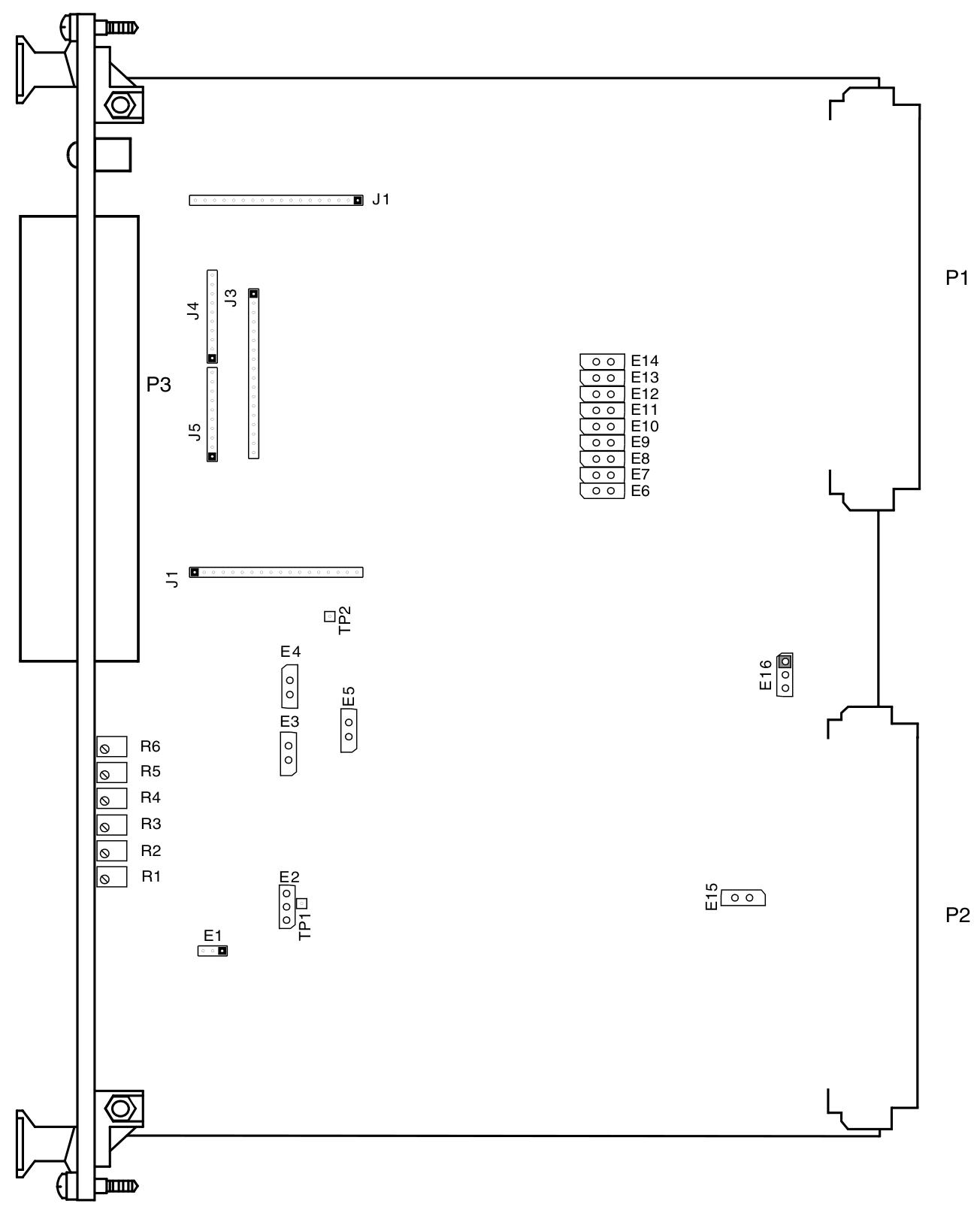
Board address: occupies a short I/O address space of 128 consecutive bytes, with the base address controlled by jumper E6 to E14. The installed jumper corresponds to binary 0, and the uninstalled one corresponds to binary 1. The factory default address is short I/O $0000 (all jumper installations).
Address modifier: Jumper E16 determines the access mode of the response, including monitoring, non privileged, or both.
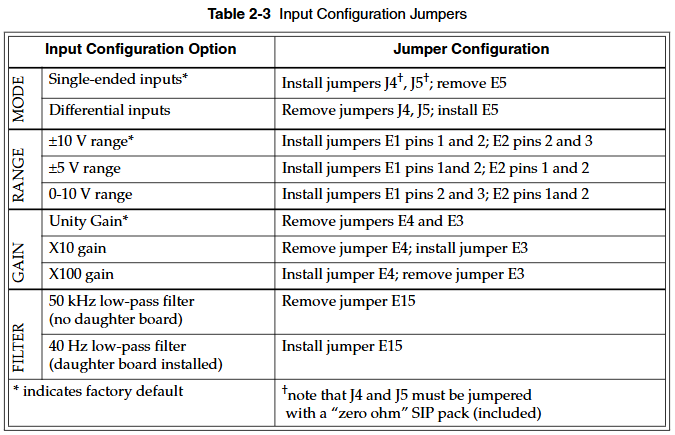
Input configuration: Three jumpers (J4, J5, and E5) are used to configure single ended or differential inputs, two jumpers (E1 and E2) control the input voltage range, two jumpers (E3 and E4) control the gain, and there are filter related jumpers. The factory default configuration is single ended, ± 10 V range, and unity gain.
Analog input connector description: 16 differential or 32 single ended analog input connections are made through the front panel 37 pin D-type connector P3, with corresponding pins and signal allocation.
Calibration Procedure: To obtain the specified accuracy of analog measurements, calibration is required for the required range and input topology. Firstly, instrument amplifier offset and BIT voltage calibration are performed, and then the corresponding offset and gain calibration procedures for the input topology are selected. Calibration requires a 5-digit digital voltmeter (DVM) and precision voltage reference equipment.
Programming
Memory mapping: occupying 128 bytes of address space, including four information and control registers, as well as a conversion data register. Depending on the jumper configuration of the board (single ended or differential input, normal or maximum buffer for differential input), there are different memory mapping tables.
Register description
Board ID register: 8-bit read-only register, offset $00, value $37, used to uniquely identify the board.
Configuration register: 8-bit read-only register, offset $01, indicating the current configuration, including input mode and filter bandwidth information.
Control/Status Register: 8-bit read/write register with an offset of $02, allowing software to control the board and indicate its current status, including functions such as stopping automatic scanning, maximum buffer, complement, mode bit, LED off, etc.
Channel pointer register: an 8-bit read-only register with an offset of $03, typically storing the input channel number currently being sampled and converted. Under specific configurations, it can determine the most recently updated data register.
Data registers: Depending on the state of the maximum buffer location, there are 16 or 32 data registers. Starting from an offset of $40, each 12 bit conversion data containing its related channel is aligned to the right within the 16 bit data register.
Built in testing function: It can test the function by applying various internal reference voltages to channel 0 input. The host software can read the value of channel 0 and compare it with the expected value. There are corresponding BIT value tables for different ranges and gain settings.
Range and gain determination: The analog gain and range can be set by the user, but the software cannot directly read these settings. It is not recommended to determine the current settings through BIT voltage stimulation, as the board must be calibrated to a single gain and range setting.
Accessing data in byte form: Data registers should typically be accessed using a single 16 bit word transfer, or two consecutive byte transfers, but there is a risk of confusion caused by data updates, which can be avoided by pausing automatic scanning or ensuring that byte accesses are continuous and undisturbed.
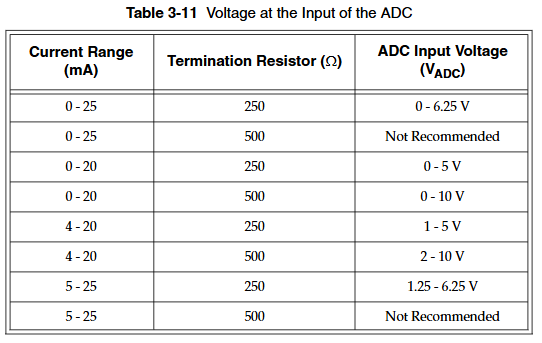
Current input options: VMIVME-3125-200 and VMIVME-3125-300 offer different terminal resistances, and the ADC input voltage is related to the current range, allowing for the calculation of the current signal through a formula.
- OMRON
- ABB
- General Electric
- EMERSON
- Honeywell
- HIMA
- ALSTOM
- Rolls-Royce
- MOTOROLA
- Rockwell
- Siemens
- Woodward
- YOKOGAWA
- FOXBORO
- KOLLMORGEN
- MOOG
- KB
- YAMAHA
- BENDER
- TEKTRONIX
- Westinghouse
- AMAT
- AB
- XYCOM
- Yaskawa
- B&R
- Schneider
- KONGSBERG
- NI
- WATLOW
- ProSoft
- SEW
- ADVANCED
- Reliance
- TRICONEX
- METSO
- MAN
- Advantest
- STUDER
- DANAHER MOTION
- Bently
- Galil
- EATON
- MOLEX
- DEIF
- B&W
- ZYGO
- Aerotech
- DANFOSS
- Beijer
- Moxa
- Rexroth
- Johnson
- WAGO
- TOSHIBA
- BMCM
- SMC
- HITACHI
- HIRSCHMANN
- Application field
- XP POWER
- CTI
- TRICON
- STOBER
- Thinklogical
- Horner Automation
- Meggitt
- Fanuc
- Baldor
- SHINKAWA
- Other Brands
- UniOP
- KUKA
- Iba
- Beckhoff
- ADLINK
-
 LUST LTi Motion CDB22.004 CDB2000 Drive
 -
 LUST Lti Drives CDE32.003 Frequency Drive
 -
 LTI VF1406M.C9.PT1.BR1 Frequency Drive
 -
 LUST LTI Drives CDA34.006 W3.0 Servo Drive
 -
 Lust LTI Drives CDA34.017.C2.CP Servo Controller
 -
 LTi DRiVES LST-097-5-30-560/T1 Servo Motor
 -
LTi Drives LSH-050-2-45-320/T1 Servo Motor 4500rpm
-
 LUST LTI Drives VF1204S G10 FA VFD 0.75 kW 230VAC
 -
 LTi Drives LST-097-3-30-560/T1 1R Servo Motor
 -
 LTI Servo One Junior SO22.003.0082.0000.0 Controller
 -
 LTI Drives GmbH SO22.003.0042.0000.0 Servo Controller
 -
 LUST LTi CDB32.004.C2.4.SH Servo Drive 24-48V
 -
 LTi Drives LST-097-5-30-560/T1 1R Servo Motor
 -
 LUST LTI Drives CM-CAN1 3084464 Communication Module
 -
LUST LTi Drives CDE32.003.C2.3 Positioning Controller 230V
-
 LUST LTi Drives SO84.020.0020.0000.2 Servo One 20A
 -
LTI DRiVES CDB34.003 Servo Drive
-
 LTI DRiVES CDE34.010 D2.4 Frequency Inverter
 -
 LTi DRiVES BR-090.03.540-UR Braking Resistor
 -
 LTI SO84.012 Servo Drive
 -
 LTi Drives LSH-050 Servo Motor
 -
LTi Drives SO84.004 Servo Controller
-
LTI DRiVES LSN-127 Servo Motor
-
 LUST CDA34.006 W3.0 Servo Controller
 -
 LTi DRiVES SO84.004 Servo Drive
 -
LUST LTi DRiVES LST-097-3-30-560/T1.1R Servo Motor
-
 LTi Drives CDE32.003.C2.4 Software LBXR41024B014
 -
 LTI Motion Servo One SO84.006.0173.1100.1 Controller
 -
LTi Drives LSH-074-2-30-320/T1 G6.1M Servo Motor
-
 LUST CDB22.004.0111.00.0 LTi Drives Servo Controller
 -
 Lust So84.012.0030.1700.2 LTi Drives Servo Controller
 -
LTi Drives Lust VF1204S G10 FB I6 M3 Drive Module
-
LTI Drives GmbH SO84.008.0020.0000.2 Servo Controller
-
Lust CDA34.006.C2.0 LTI Drives Servo Controller 2.2 kW
-
 LTi Drives Lust CDA34.017.W3.0 Control Unit 7.5 kW
 -
LTi Drives CDE34.010 Positioning Controller 10A
-
Lust LTi Drives CDA34.010 W3.0 Frequency Inverter
-
 LTi SO22.003.0010.0000.0 ServoOne Junior Drive
 -
LUST LTi Drives CDA32.008 Servo Drive
-
LUST LTi DRIVES LSH-074 Servo Motor
-
Lti CDB32.004.C2.4.SH AC Servo Drive
-
Lust LTi Drives VF1202S Frequency Inverter
-
Lust LTI Drives CDB32.004.C3.0.SH Servo Controller
-
LUST SO84.012.0030.1700.2 Servo Drive
-
Lust LTi CDB32.004 Servo Drive
-
LUST LTI Drives CDA34.006 Servo Drive
-
LTi DRiVES BR-090.03.540-UR Braking Resistor
-
Lust LTI Drives CDA34.017 Servo Controller
-
Lust LTi Drives CDE34.010.D2.4 Positioning Controller 10A
-
LTi Drives LSH-050-3-30-48/T1 PM Servo Motor
-
 LTI CDD34.005.C2.1 Servo Drive Controller
 -
LUST LTI Drives CDB32.003.C2.4 Servo Drive
-
LTI D-35633 Drive Servo Drive Controller
-
 LTI Drives GmbH SO22.003.0042.0000.0 Servo Controller
 -
LTi Drives SO84.006.1030.0000.2 Servo Controller
-
LUST LTi Drives CDA32.008 C1.4 HF V180.15 1.5 kW
-
 LTI Drives Servo One SO84.045.0010.0001.2-W 22 kW
 -
Lust LTI CDE32.003.C2.4 Servo Drive Controller
-
LUST LTI Drives CDA34.003 Servo Controller
-
LUST LTI Drives CDA32.006 Servo Controller
-
Lust LTi Drives CDE32.004 Servo Drive
-
LUST LTi Drives SO84.012 Servo Controller
-
 LTI DRIVES LSH-060 Servo Motor
 -
LUST LTI Drives CDE32.004 with CM-DPV1
-
LTi DRiVES SO84.016 Servo Drive
-
LTI Drive CM-DPV1 Communication Module
-
LTi DRiVES DSM4-05.4-20R82-400 Servo Motor
-
LUST LTI Drives CDA34.003 Servo Controller
-
LTI Drives Servo One SO84.045.0010.0001.2-W 22 kW
-
LUST LTI Drives CDB32.008 W2.4 BR PC1 Servo Drive
-
LTi Drives SO84.006.1030.0000.2 Servo Controller
-
LTI DRIVES CDE34.010D2.4 Servo Drive Controller
-
 Hettich Rotanta 46 RSC Control Board VF1204S
 -
Lust LTI Drives CDA34.017.C2.CP Servo Controller 7.5 kW
-
LUST LTI Drives CDA34.003.C3.0 Servo Controller 0.75 kW
-
Lust LTI Drives CDA34.008.C1.3 Servo Controller 3 kW
-
Lust LTi Drives CDB22.004.0111.00.0 Servo Drive
-
LTi Drives SO84.032.0030.1000.2 Servo Controller
-
LUST LTi CDA32.004 C1.4 H08 B0 Servo Controller
-
LTI DRIVES CDB34.010 C2.4 Servo Drive
-
LUST LTi Drives CDA32.008 C1.4 Servo Controller
-
LTI Motion CDE32.003.C3.0 Servo Positioning Controller
-
LTI DRIVES CDE34.010 D2.4 Servo Drive Unit
-
 LUST LTi Drives CDD34.005.C2.1 Servo Drive
 -
LTi Drives SO84.012.0002.0100.2 Servo Controller
-
LUST LTi Drives CDE34.010.D2.4 Servo Drive
-
LUST LTI Drives CDF30.008 Servo Drive
-
LTi Drives SO CM-P.0010.11.00.0 Power Module
-
 LTi DRiVES SO84.008.0002.0100.2 Servo Controller
 -
LTI MOTION Servo Drive SO22.006.0040.1000.1
-
LTi DRiVES SO24.007.0030.1000.0 ServoOne Junior
-
LTi DRiVES LUST BC1300 Braking Module
-
LUST LTI DRIVES CDE34.010 Variable Frequency Drive
-
LUST LTI DRIVES CDA32.004 Servo Drive
-
LTi DRiVES LST-074-2-30-560/T1 Servo Motor
-
LUST LTI DRIVES CDB32.008 Servo Drive Module
-
 Lust Antriebstechnik LTI Drives VF1204S Inverter
 -
Lust LTI Drives CDE32.008 C3.0 Positioning Controller
-
LTI Drives LUST Servo One C-5633 D-35633
-
 Lust LTI Drives CDA34.008.C1.3 Servo Controller 3kW
 -
LTI CDF30.008 C2.6 Servo Drive 10962161
-
LUST LTi Drives CDB32.004 C2.3 SH Servo Drive
-
Lust LTi Drives CDE34.010 D2.0 Servo Drive
-
LTi Motion CDA32.006 Servo Drive with CM-CAN1
-
Lust LTI Drives CDB32.008 C2.3 Servo Controller
-
LTi CDE34.017.W3.0 Servo Drive
-
LUST LTI LST-074-2-30-320/T1 Servomotor
-
Lust LTi CDF30.002 C3.0 Positioning Controller
-
LTi DRIVES CDF30.008.C2.4 Drive
-
LUST LTI CDB32.008 W2.4 BR PC1 Drive
-
LTi SO84.004.0002.0100.2 Servo Controller
-
LTi SO84.012.0030.0011.2 ServoOne Drive
-
LTI Drives LUST Servo One C-5633 D-35633
-
LTi DRiVES c-line Smart Card A028.V01.1
-
LUST LTI CD A34.008 W1.4 BR Drive
-
LUST LTI LSH-097-2-30-560/T1 Servomotor
-
LUST LTI LST-074-2-30-320/T1 Servomotor
-
LUST LTi CDB32.004 C2.4.SH Servo Drive
-
 LTI Drives PM-E40.2DRA054P Pitch Inverter
 -
Lust LTI Drives CDF30.008 Servo Drive 8673548
-
LTI Drives CDF30.002.C0.7 Servo Controller
-
 Lust LTI Drives CDB32.008.W2.4 Servo Drive
 -
Lust LTI Drives CDB34.003 Servo Motor Driver
-
Lust LTI Drives CDA32.004 Servo Drive 3084456
-
Lust LTI Drives CDE34.005.W2.2 Servo Drive
-
Lust LTI Drives CDA34.006.W3.0 Servo Drive
-
 LTI Drives CDF30.008.C2.4 Servo Controller
 -
LTI Drives Lust CDB32.004.C2.4.SH Servo Drive


