

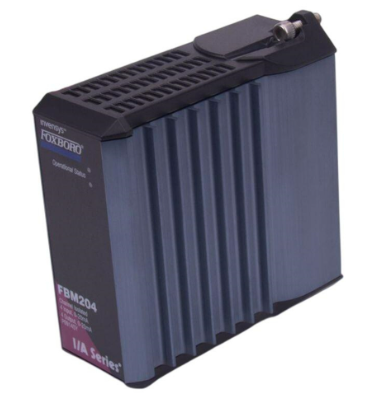
FOXBORO P0926KK belongs to the "Function Expansion and Logic Processing Core Module" in PLC systems. Its core positioning is to receive instructions from processor modules, complete complex control logic operations, real-time processing of multi-channel signals, data exchange between modules, and linkage control of external devices. Unlike basic I/O modules, this module not only has signal acquisition and output capabilities, but also integrates dedicated computing chips and protocol processing units, which can achieve high-order control functions such as PID regulation, sequence control, interlock protection, etc. It is a key link to improve the control accuracy and response speed of PLC systems.
FOXBORO P0926KK PLC system functional module
Module core positioning and functional architecture
FOXBORO P0926KK belongs to the "Function Expansion and Logic Processing Core Module" in PLC systems. Its core positioning is to receive instructions from processor modules, complete complex control logic operations, real-time processing of multi-channel signals, data exchange between modules, and linkage control of external devices. Unlike basic I/O modules, this module not only has signal acquisition and output capabilities, but also integrates dedicated computing chips and protocol processing units, which can achieve high-order control functions such as PID regulation, sequence control, interlock protection, etc. It is a key link to improve the control accuracy and response speed of PLC systems.
From the perspective of functional architecture, the P0926KK module mainly consists of five parts: logic operation unit, signal conditioning module, communication interface unit, fault diagnosis unit, and power management unit. The logic operation unit adopts high-performance embedded processors to ensure the fast execution of control instructions; The signal conditioning module achieves precise conversion and anti-interference processing between analog and digital signals; The communication interface unit ensures stable communication with other modules and the upper computer within the system; The fault diagnosis unit monitors the real-time operation status of the module and provides feedback on abnormal information; The power management unit provides stable power supply for each component, ensuring the continuous and reliable operation of the module.
Core technical characteristics
FOXBORO P0926KK is designed based on strict industrial standards and exhibits outstanding advantages in logic operations, signal processing, compatibility, and reliability. The specific technical features are as follows:
1. Efficient logical operations and control capabilities
The module is equipped with a 32-bit high-performance RISC processor, with a clock speed of up to 200MHz and powerful instruction processing capabilities. It supports various mainstream PLC programming languages such as ladder diagram (LD), function block diagram (FBD), structured text (ST), etc. For complex industrial control scenarios, its computing unit can simultaneously process up to 1000 control logic instructions. The number of PID control loops can be extended to 64, with an adjustment accuracy of ± 0.1%. It can quickly respond to changes in on-site parameters and achieve precise control of process parameters such as temperature, pressure, and flow rate.
2. Compatibility and precise processing of multiple types of signals
The module integrates multi-channel signal processing units and is compatible with various types of signal interfaces such as analog input (AI), analog output (AO), digital input (DI), and digital output (DO). The analog channel supports standard signals such as 4-20mA and 0-10V, while the digital channel supports two input types, NPN/PNP, and two output types, relay/transistor. It can directly interface with various industrial equipment such as pressure transmitters, flow sensors, solenoid valves, and frequency converters. Differential amplification and optoelectronic isolation technology are used in the signal processing process, with an analog signal acquisition accuracy of ± 0.05% FS and a digital signal response time of ≤ 0.2ms, effectively suppressing electromagnetic interference in industrial sites and ensuring the accuracy of signal transmission.
3. Flexible communication and system integration capabilities
The module is equipped with rich communication interfaces, including mainstream industrial communication interfaces such as RS485, Ethernet/IP, PROFINET, etc. It supports communication protocols such as MODBUS and PROFIBUS-DP, and can achieve seamless integration with FOXBORO I/A Series DCS systems, third-party PLCs, and upper monitoring systems (such as SCADA, MES). The communication speed between the backplane bus and the processor module and I/O module within the system can reach 100Mbps, ensuring real-time data exchange between modules, while supporting remote data transmission and control, making it easy to build a distributed control system.
4. Comprehensive fault diagnosis and redundant protection
The module is equipped with a comprehensive fault diagnosis mechanism, which can accurately identify power faults, communication interruptions, channel short circuits/breaks, and other abnormal situations through real-time monitoring of parameters such as power supply voltage, module temperature, communication status, and channel signals. Local alarms can be triggered through LED indicator lights (running light, fault light, communication light), and fault codes can be uploaded to the processor module and upper system for operators to quickly locate and troubleshoot problems. In addition, the module supports hot redundancy configuration. When the main module fails, the backup module can automatically switch within 50ms, ensuring uninterrupted operation of the control system and improving system reliability.
5. Industrial grade durability and environmental adaptability
For the complex working environment of industrial sites, the module adopts reinforced design: the shell is made of aluminum alloy die-casting material, which has good dust and moisture resistance, and the protection level reaches IP20 (when installing the cabinet); The internal circuit adopts a wide temperature adaptation design, with a working temperature range of -20 ℃~70 ℃, which can adapt to different working conditions such as high-temperature workshops and cold outdoor environments; Simultaneously possessing anti vibration (compliant with IEC 60068-2-6 standard) and anti impact (compliant with IEC 60068-2-27 standard) performance, it can still operate stably in scenarios with severe vibrations such as metallurgy and mining.
Key technical parameters
The technical parameters of FOXBORO P0926KK accurately match the requirements of medium and large-scale industrial control, and the core parameters are as follows:
1. Basic parameters
-Module type: PLC system functional module (logical operation+signal processing)
-Applicable systems: FOXBORO Evo series, I/A series PLC system
-Supply voltage: 24V DC (allowable fluctuation range: 18V~30V DC)
-Power consumption: ≤ 15W during normal operation, peak power consumption ≤ 20W
-Installation method: Standard 35mm DIN rail installation, compatible with FOXBORO standard cabinet
2. Calculation and control parameters
-Processor: 32-bit RISC processor, with a clock speed of 200MHz
-Storage capacity: 8MB program memory, 4MB data memory (supports SD card expansion up to 32GB)
-Control logic instruction: supports 1000 concurrent logical operations
-PID control circuit: standard configuration includes 16 channels, maximum expandable up to 64 channels, with a control accuracy of ± 0.1%
-Pulse output: Supports up to 100kHz high-speed pulse output, used for stepper motor/servo control
3. Signal processing parameters
-Analog input (AI): 8 channels as standard, with a maximum expansion to 16 channels; Signal type 4-20mA/0-10V; Accuracy ± 0.05% FS; Sampling rate 100Hz/channel
-Analog output (AO): 4-channel standard configuration, with a maximum expansion to 8 channels; Signal type 4-20mA/0-10V; Accuracy ± 0.1% FS; load capacity ≤ 500 Ω
-Digital input (DI): 16 channels as standard, with a maximum expansion to 32 channels; Signal type NPN/PNP is optional; Response time ≤ 0.2ms
-Digital output (DO): 8 channels as standard, with a maximum expansion to 16 channels; Output type relay (2A/250V AC)/transistor (0.5A/30V DC)
4. Communication and redundant parameters
-Communication interface: 1 RS485, 2 Ethernet/IP, 1 PROFINET (optional)
-Communication protocol: Supports MODBUS RTU/TCP, PROFIBUS-DP, Ethernet/IP
-Backplane bus speed: 100Mbps
-Redundancy switching time: ≤ 50ms (in hot redundancy configuration)
5. Environmental and mechanical parameters
-Working temperature: -20 ℃~70 ℃
-Working humidity: 10%~90% RH (no condensation)
-Protection level: IP20 (installed inside the cabinet)
-Anti vibration: 10Hz~500Hz, acceleration 5g (IEC 60068-2-6)
-Impact resistance: 15g, continuous for 11ms (IEC 60068-2-27)
Typical application scenarios
FOXBORO P0926KK, with its powerful logical operation capability and flexible adaptability, is widely used in various medium and large-scale industrial control scenarios. Typical applications include:
1. Petrochemical industry - production process interlocking control
In the catalytic cracking unit of petroleum refining and the reaction kettle control system of chemical synthesis, the P0926KK module undertakes the core control task: collecting parameters such as temperature, pressure, liquid level, and medium composition inside the reaction kettle through the AI channel, calculating them through the built-in PID algorithm, adjusting the opening of the feed valve, heating power, etc. through the AO channel, and monitoring the operating status of pumps, compressors, and other equipment through the DI/DO channel to achieve an automated control process of "parameter abnormality interlock shutdown emergency pressure relief", avoiding safety accidents caused by overheating and overpressure, and ensuring the stability of the production process.
2. Power industry - coordinated control of generator sets
In the control system of power generation units in thermal power plants, modules are used to achieve coordinated control of boilers, turbines, and generators: collecting parameters such as boiler steam pressure, turbine speed, and generator output power, and implementing closed-loop control of "load command fuel supply steam regulation power output" through logical operation units. At the same time, it is linked with the power plant DCS system through communication interfaces to upload operational data and receive scheduling instructions, ensuring efficient and stable operation of the generator units under different load demands and improving power generation efficiency.
3. Intelligent Manufacturing - Production Line Automation Control
In automation scenarios such as automotive welding production lines and lithium battery packaging production lines, modules serve as the control core: they collect workpiece position and equipment status signals feedback from sensors through DI channels, and after logical operations, control the action sequence of robotic arms, conveyor belts, welding equipment, etc. through DO channels. At the same time, they control servo motors for precise positioning through high-speed pulse output, achieving full process automation of "loading processing detection unloading". Its multi-channel signal processing capability can adapt to parallel control of multiple production lines, improving production efficiency.
4. Metallurgical industry - parameter control of smelting process
In the process of blast furnace ironmaking and converter steelmaking in steel plants, modules are used for precise control of smelting parameters: parameters such as blast furnace temperature, furnace pressure, and molten iron composition are collected through AI channels, combined with preset control logic, and the blast flow rate, oxygen supply, and raw material ratio are adjusted through AO channels. At the same time, the cooling system status of the furnace body is monitored through interlocking logic. When abnormalities such as insufficient cooling water occur, an alarm is immediately triggered and the feed is cut off to ensure the safety of smelting equipment and improve the quality of molten steel.
5. Water treatment industry - water purification process control
In the water purification system of large-scale sewage treatment plants, modules are used to achieve linkage control of multiple process links: collecting parameters such as COD concentration at the inlet, dissolved oxygen content in the aeration tank, and liquid level in the sedimentation tank, controlling the speed of the aeration fan and the flow rate of the dosing pump through a PID adjustment loop, and controlling the start and stop of the drainage valve and reflux pump through a DO channel to achieve automated operation of "inlet aeration sedimentation disinfection", ensuring that the effluent water quality meets the standard and reducing manual operation and maintenance costs.
Possible models needed
P0926KK
P0926KL
P0926TP
P0928AY
P0950CA
P0960AH
P0960HA
33C-AJ-D
FBM205 cable
FBM241 cable
FCM10E
FCM10EF
FMB231
GW30
IPM2
P0400BJ
P0400DL
P0903AA
P0903MU
P0903NQ
P0903NW
P0903ZE
P0903ZL
P0903ZN
P0903ZP
P0903ZQ
P0904BH
P0904FH
P0904HB
P0911QB
P0911QB-C
P0911QC-C
P0911QH-A
P0911VJ
P0912CB
P0912CM
P0914XA
- User name Member Level Quantity Specification Purchase Date
- Satisfaction :
-


-
 CCS 6900G/P pressure switch
 -
 BENDER WR Transformer Selection
 -
 BENDER RCMA475LY Residual Current Monitoring
 -
 BENDER IRDH575 Insulation Monitoring
 -
 BENDER IRDH265 Insulation Monitoring and Debugging
 -
 Bender RCMA475LY residual current monitor debugging
 -
 Beckwith Electric M-3425A Generator Protection Relay Debugging Guide
 -
 Automated MEX816U Expander Troubleshooting Guide
 -
 ASEM HT2150 Industrial Tablet Selection and Troubleshooting
 -
 Troubleshooting and practical application of Advantest U3771/3772 microwave spectrum analyzer
 -
 Advantest R6144 Programmable DC Voltage/Current Source (Calibration Source) Calibration and Maintenance
 -
 Aerotech UNIDEX 100/U100i single axis motion controller
 -
 Aerotech Ndrive MP Ultra Compact PWM Digital Servo Driver
 -
 Aerotech Ndrive HPe 10/20/30 High Performance PWM Digital Servo Drive
 -
 Aerotech Ndrive HLe maintenance replacement
 -
 Aerotech Ndrive CP maintenance replacement
 -
 Aerotech Ndrive Linear Drive Selection
 -
 Aerotech NDrive HL linear drive maintenance replacement
 -
 Aerotech NDrive HP 10/20/30 Maintenance and Replacement
 -
 Aerotech NDrive CP10 Servo Drive Guide
 -
 SIGMATEK TAE1941 Display Unit Replacement and Troubleshooting
 -
 SIGMATEK TAE151 Replacement and Troubleshooting
 -
 SIGMATEK AKM Servo Motor Replacement and Troubleshooting Guide
 -
 SIGMATEK S-DIAS Control System Replacement and Upgrade Guide
 -
 SIGMATEK ETT Series HMI Replacement and Selection Guide
 -
 SIGMATEK DIAS Drive 310-23 servo amplifier
 -
 SIGMATEK CCP 521 C-DIAS processor module
 -
 Megmeet L6 electric drive troubleshooting
 -
 Sysmex XN-1000/2000 Technical Guide
 -
 Sysmex XN-L blood analyzer maintenance and troubleshooting
 -
 Troubleshooting and Maintenance of Sysmex XN-9000
 -
 LTI Motion ServoOne PROFIBUS/PROFINET Troubleshooting and Replacement
 -
 Micro Innovation MICRO GF1 Touch Screen Troubleshooting and Replacement
 -
 Troubleshooting and Replacement of Micro Innovation WINbloc Distributed I/O System
 -
 MICRO PANEL GS-2 Troubleshooting and Debugging
 -
 LTi Synchronous Motor LST/LSH Replacement Selection Guide
 -
 Fault diagnosis of LTi CDE/CDB3000
 -
 Maintenance and troubleshooting of ENOTEC SILOTEC 8000 silo analyzer
 -
 ENOTEC ENSITU 7000 Oxygen Analyzer
 -
 ENOTEC COMTEC 6000 ATEX GasEx Analyzer Maintenance, Calibration, and Troubleshooting Guide
 -
 ENOTEC Analyzer Family Selection Guide
 -
 ENOTEC OXITEC 500E Oxygen Analyzer
 -
 KUKA KR CS Box-2 Compact Controller for Four Axis SCARA Robot
 -
 KUKA KR C5 slim-2 Robot Controller
 -
 KUKA KR C5 micro KSS troubleshooting
 -
 KUKA KR C5 micro debugging and troubleshooting
 -
 KUKA KR C5 Controller Assembly and Troubleshooting
 -
 KUKA KR C5 Cabinet Assembly and Troubleshooting
 -
 KUKA KR C4 Smallsize-2 Debugging Guide
 -
 KUKA KR C4 Midsize Assembly Guide
 -
 ENOTEC OXITEC 5000 Oxygen Analyzer Maintenance Guide
 -
 KUKA KR C4 extended assembly and debugging
 -
 KUKA KR C4 compact assembly and debugging
 -
 KUKA Sunrise Cabinet Med Medical Collaborative Robot Special Control Cabinet
 -
 KUKA Sunrise Cabinet Next Generation Small Control Cabinet
 -
 KUKA KR C4 Smallsize-2 family's smallest control cabinet
 -
 KUKA KR C4 Midsize Fault Diagnosis
 -
 KUKA KR C4 extended is a high-power multi axis control cabinet
 -
 Troubleshooting and Maintenance of KUKA KR C4 Control Cabinet
 -
 Troubleshooting and Maintenance of KUKA KR C4 Compact Control Cabinet
 -
 KUKA KR15 DELTA-2 V2 Robot Installation and Debugging
 -
 KUKA TITAN-2 Ultra Assembly and Maintenance Guide
 -
 KUKA KR SCARA-2 CS Assembly, Debugging, and Operation Guide
 -
 Troubleshooting KUKA SCARA X
 -
 Troubleshooting of KUKA KR FORTEC-2 ultra
 -
 Troubleshooting of KUKA KR FORTEC-2
 -
 Troubleshooting KUKA KR 1000 Titan
 -
 Troubleshooting of KUKA KR 600 FORTEC
 -
 KUKA KR 500 MT FORTEC Maintenance and Inspection
 -
 KUKA KR 360 FORTEC Inspection and Maintenance Guide
 -
 Troubleshooting KUKA Sunrise Cabinet Med
 -
 KUKA KR SCARA HO Assembly and Maintenance
 -
 KUKA QUANTEC-2 PA maintenance troubleshooting
 -
 KUKA QUANTEC-2 K/P Maintenance Troubleshooting Guide
 -
 KUKA QUANTEC-2 HO Maintenance Guide
 -
 KUKA KR QUANTEC-2 HC Maintenance and Rescue Guide
 -
 KUKA KR QUANTEC-2 Maintenance Troubleshooting Guide
 -
 KUKA KR QUANTEC PA series heavy-duty palletizing robot
 -
 KUKA KR IONTEC-2 Debugging and Maintenance Guide
 -
 KUKA KR IONTEC ultra series six axis heavy-duty industrial robot
 -
 KUKA KR IONTEC HO Maintenance Troubleshooting Guide
 -
 KUKA KR CYBERTECH-3 HW maintenance troubleshooting
 -
 KUKA KR CYBERTECH-3 maintenance troubleshooting
 -
 KUKA KR8 R2100-2 arc HW maintenance troubleshooting
 -
 KUKA KR CYBERTECH nano-2 maintenance troubleshooting
 -
 KUKA KR 20 R1810 HO maintenance troubleshooting
 -
 KUKA CYBERTECH maintenance troubleshooting
 -
 KUKA KR CYBERTECH CR maintenance troubleshooting
 -
 KUKA KR AGILUS-3 ultra maintenance troubleshooting
 -
 KUKA KR 300 R2700-2 C-F maintenance troubleshooting
 -
 KUKA KR 20 R1820-2 E Maintenance Troubleshooting and Replacement Practice
 -
 KUKA AGILUS-3 troubleshooting
 -
 KUKA KR AGILUS-2 maintenance troubleshooting
 -
 KUKA KR 1000 titan PA troubleshooting
 -
 KUKA KR 700 PA maintenance troubleshooting
 -
 KUKA KR18 R1450-3 PP Operation and Maintenance Essentials
 -
KUKA KR12 SCARA Operations Essentials
-
 KUKA KR4 R600 Operation and Maintenance Essentials
 -
 KUKA KR 3 AGILUS Operation and Maintenance Safety Essentials
 -
 KUKA LBR iiwa CR Cleanroom Troubleshooting and Maintenance
 -
 Troubleshooting and Maintenance of KUKA KR AGILUS sixx
 -
 KUKA KR60 SCARA CS Maintenance Guide
 -
 KUKA KR 23 SCARA-2 Robot Installation and Maintenance Detailed Explanation
 -
 KUKA KR 20 SCARA CS Robot Selection and Maintenance Guide
 -
 KUKA KR 15 DELTA-2 Robot Installation and Maintenance
 -
 KUKA KR 13 SCARA-2 CS Detailed Explanation
 -
 KUKA KR 3 D1200 Robot Operation and Maintenance
 -
 KUKA KR 3 D1200 HM Robot Operation and Maintenance Guide
 -
 KUKA LBR Med Medical Robot Integration Guide
 -
 KUKA iiwa Robot Safety Operation and Maintenance
 -
 KUKA LBR iiwa CR Operations and Troubleshooting
 -
 Lauer PCS Series Operation Console Configuration Guide
 -
 Installation and Maintenance Guide for KUKA LBR iisy Series Collaborative Robots
 -
 KUKA LBR iisy 3 R760 Collaborative Robot Debugging Guide
 -
 KUKA LBR iico Robot Installation and Debugging Technical Guide
 -
 Lauer Starline LCA 300/320/325 Text Display Application Guide
 -
 Lauer PCS 950 Operation Console Application Guide
 -
 Lauer EPC series industrial computer configuration
 -
 Bonfiglioli Precision Planetary Gearbox Selection and Application Guide
 -
 Installation and heat dissipation of Bonfiglioli Vectron cold plate frequency converter
 -
 Bonfiglioli Vectron EM-RES-02 Expansion Module Installation and Configuration Guide
 -
 Bonfiglioli Vectron EM-RES-01 Expansion Module Rotary Transformer Interface Configuration Guide
 -
 Bonfiglioli Vectron EM-IO-04 module KTY temperature measurement and digital port configuration
 -
 Bonfiglioli Vectron EM-IO-03 Expansion Module Dual Analog Output and PTC Configuration
 -
 Installation of Bonfiglioli Vectron EM-IO-02 Expansion Module and PTC Temperature Monitoring Configuration
 -
 Bonfiglioli Vectron EM-IO-01 Expansion Module Installation and System Bus Configuration Guide
 -
 Bonfiglioli F series gearbox spare parts identification and replacement guide
 -
 Installation, maintenance, and troubleshooting of Bonfiglioli HF series reducers for hoisting applications


